

Beautiful Every Night.
Practical for the Years Ahead.
Permanent roofline lights can make a home festive. Thoughtful landscape lighting brings the architecture, garden, and paths into the picture. The difference becomes even clearer when it is time for service.
Why Do We Recommend Starting at Ground Level?
For homeowners who want warm, everyday curb appeal, we generally recommend a well-designed foundation of ground-level landscape and architectural lighting. It lets us shape the light around the home, highlight its materials, and illuminate the places people actually walk.
It also keeps many fixtures and connections within easier reach. If a light needs attention, a technician can often inspect it from the landscape rather than arrange access to a second-story eave.
Our Focus at NightOak
NightOak designs, installs, and services low-voltage landscape and architectural lighting. We do not install permanent soffit or roofline lighting systems. This guide explains why ground-level lighting is often our starting point and what to ask if you are considering roofline lighting.
Light the Roofline, or Light the Home?
The right choice starts with the effect you want to see from the street, through a window, and when you arrive home after dark.
Color, Outlines & Celebrations
Permanent roofline systems typically place small LEDs or light strips along eaves or soffits. Many offer app-controlled colors, holiday patterns, and warm-white settings. They can be a good fit when changing the outline of the home for seasons and occasions is a priority.
Some also cast light down the facade. The effect depends on mounting position, spacing, optics, and the shape of the building.
Texture, Depth & Everyday Warmth
Ground-mounted uplights can bring out stone, brick, columns, and trees. Path lights and carefully placed accents help connect the entry, planting beds, and outdoor living areas.
Beam spread, aiming, shielding, and brightness are selected for each feature. The goal is a balanced scene, with comfortable light where you need it and darkness where you do not.
A roofline outline does not automatically illuminate a walkway. Uplighting does not reproduce a continuous holiday outline. Both can coexist, but a larger number of lights is not a substitute for a thoughtful plan.
Explore our approach to architectural lighting and pathway lighting.
What Happens When a Roofline Jumper Fails?
A jumper is a connecting cable used to bridge a gap between lighting sections, such as a change in roofline or an area that does not need lights. Depending on the system, it carries power and may also carry the control signal that tells individual lights what to do.
A damaged cable, loose connector, moisture intrusion, or an unsuitable extension can interrupt that connection. Symptoms may include a dark section, flickering, or incorrect colors. Similar symptoms can come from a light module, power supply, controller, or configuration issue, so a dark section alone does not prove that the jumper failed.
Find the Actual Fault
The technician checks the supply, controller, wiring, and affected section rather than replacing parts at random.
Reach the Connection Safely
A connector at a low, accessible eave is a different service task from one above a steep slope, tall gable, or porch roof.
Repair, Protect & Retest
The correct replacement must match the system. Connections need the manufacturer's specified weather protection, and the affected sections should be tested before the job is complete.
The replacement part may be small.
Getting to it can be the larger expense.
Ask your roofline installer to show you where jumpers, splices, power supplies, and controllers will be located before installation. Accessible service points and a documented wiring plan can make future repairs much more straightforward.
What Can Add to Roofline Lighting Repair Costs?
A repair bill can include diagnosis, replacement parts, labor, access equipment, and testing. The height of the failed component can change the cost even when the electrical repair itself is simple.
Time to Find and Fix It
Tracing an intermittent fault, opening track, checking connections, obtaining compatible parts, and testing the finished repair all take time. A service-call minimum or a return visit may apply.
When a Lift Is Needed
Some repairs can be completed with appropriate ladder access. Others may require a boom lift or another suitable access method because of height, reach, obstacles, or ground conditions. A lift is not required for every roofline repair.
Delivery, Setup & Site Protection
When equipment is needed, ask about delivery and pickup, minimum rental periods, setup time, equipment operation, and protection for lawns or hardscape. The machine must be suitable for the site's access and ground conditions.
Read the Warranty Details
Parts coverage and service coverage are not always the same. Some installers include labor or access costs; others do not. Confirm coverage for diagnosis, travel, lift rental, and replacement components in writing.
How Much Does a Lift Add?
There is no dependable flat amount for every home. Equipment size, rental duration, location, delivery, and access all affect the quote. A published daily rental rate is only one piece of the total. Ask the installer for an all-in access price, not just the cost of the replacement light or jumper.
A Useful Way to Compare
Repair total = diagnosis + parts + repair labor + access costs + applicable fees and tax − confirmed coverage.
Ask which items are already bundled so you do not count them twice. NightOak's Pricing Guide describes our own services; it is not a price list for permanent roofline repairs.
See What Access Adds to a Repair
Use amounts from an actual estimate to separate the repair itself from the cost of reaching it. This worksheet starts blank because a fair comparison needs your home's details.
Repair & Access Cost Planner
Enter quoted amounts in US dollars. Enter 0 only when an item truly does not apply or is included elsewhere.
Planning arithmetic only, not a NightOak quote or a prediction of repair frequency. No information is sent by this worksheet. Use comparable repair scopes when comparing estimates.
The Practical Advantage of Ground-Level Fixtures
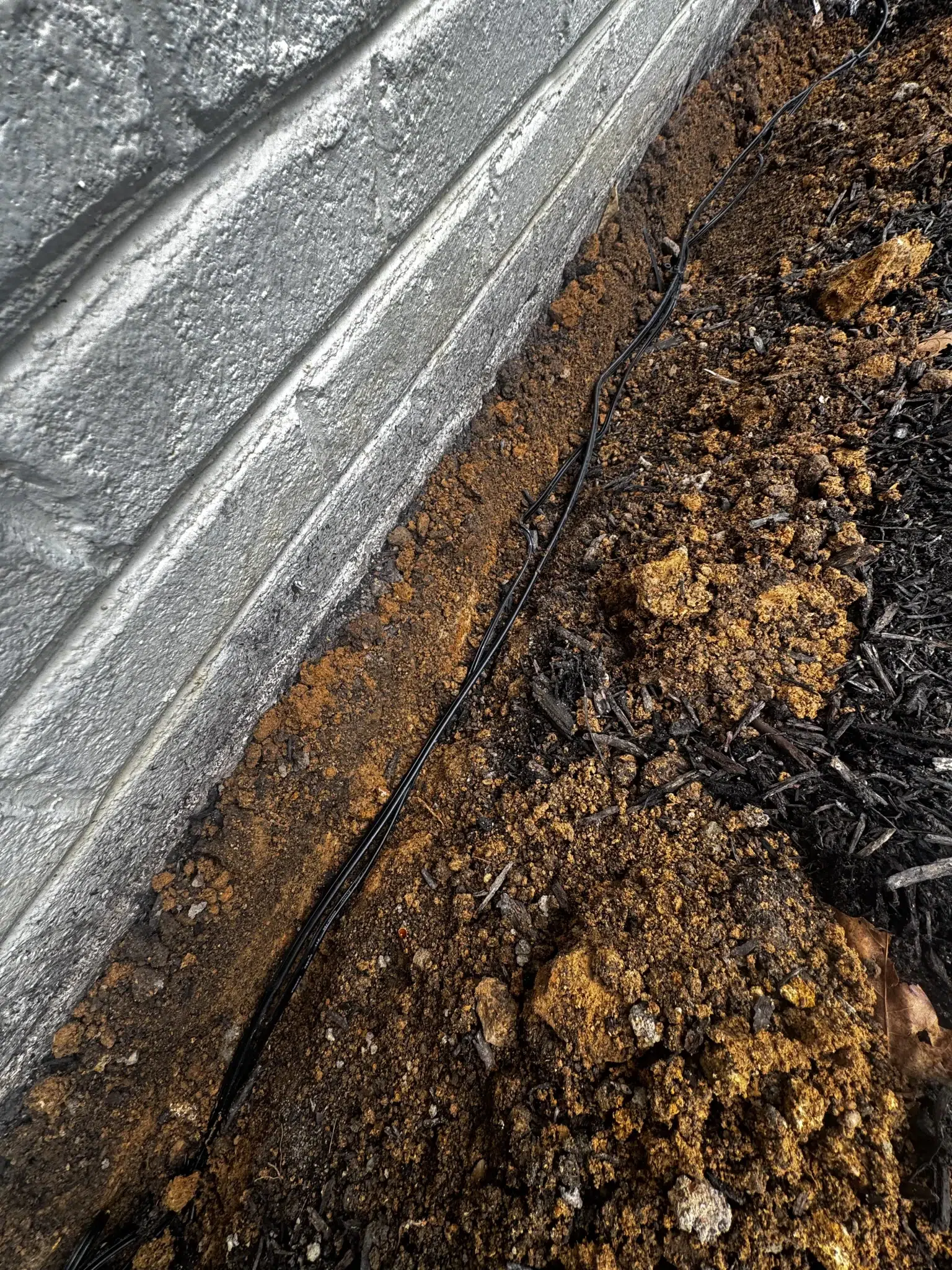
When a ground-mounted fixture needs cleaning, aiming, a lamp change where applicable, or a connection repair, the work can often be done without elevated-access equipment. That makes routine care more approachable and can reduce the access portion of a service visit.
Ground-level fixtures also give the design room to adapt. Plants grow. A walkway changes. A beam that worked well at installation may need to be redirected. Accessible fixtures and carefully managed service slack help make those adjustments possible.
Accessible Does Not Mean Maintenance-Free
Landscape lighting still needs care. Soil movement, moisture, gardening, lawn equipment, plant growth, and damaged underground wiring can create service work. Tracing a buried fault can take time. Tree-mounted downlights and other elevated fixtures have their own access needs.
Our recommendation is to make serviceability part of the original design, not to promise that every ground-level repair will be cheaper. See our lighting maintenance and low-voltage lighting repair services.
Seven Questions Worth Asking Your Installer
What Will This Light Actually Illuminate?
Ask to see the everyday warm-white setting as well as holiday colors. Look at the facade, paths, windows, and neighboring property.
Where Are the Service Connections?
Identify jumpers, splices, controllers, and power supplies. Ask for a wiring layout and the product model information.
How Will You Reach a Failed Component?
Have the installer explain the access plan for the highest or most difficult section of your home.
Who Pays for a Lift?
Ask whether equipment, transportation, setup, and labor are included during the warranty period and after it ends.
What Does the Warranty Cover?
Clarify parts, labor, service-call fees, exclusions, transferability, and the process for getting help.
Can Components Be Replaced Individually?
Ask about compatible replacement parts, proprietary connectors, controller support, and who can service the system if the original installer is unavailable.
What Ongoing Care Should I Budget For?
Get a realistic maintenance plan and ask how future roof, gutter, painting, or landscape work could affect the lights.
Roofline vs. Landscape Lighting FAQs
Are permanent roofline lights a bad investment?
No. They can be a good choice for homeowners who value programmable colors and seasonal displays. Compare the look, service access, product support, and written warranty with your priorities before deciding.
Does every failed jumper require a lift?
No. It depends on where the connection is located and whether a technician can reach it safely using another appropriate method. High or obstructed areas may need a lift; an accessible low eave may not.
Will a failed jumper turn off the entire system?
Not necessarily. The effect depends on the wiring layout, power feeds, and data architecture. A fault may affect a section or downstream lights. Diagnosis is needed before identifying the failed part.
Does a parts warranty pay for the whole repair?
Not automatically. Some service plans are comprehensive; others cover only specified components. Confirm labor, diagnosis, travel, equipment, and access costs with your installer.
Can ground-level lighting still highlight a tall home?
Yes, in many designs. Fixture position, beam spread, output, shielding, and aiming determine the result. Deep overhangs, setbacks, and the building's shape may call for additional lighting approaches.
Does NightOak install or repair permanent roofline systems?
NightOak's focus is low-voltage landscape and architectural lighting, not permanent soffit or roofline systems. For an existing roofline system, start with its installer or manufacturer. For a ground-level lighting design, we would be happy to discuss your home.
Start with the Home.
Plan for the Years Ahead.
We recommend starting at ground level because it can deliver the warm, layered look many homeowners want while keeping much of the system easier to adjust and service.
The best lighting plan considers more than installation night. It considers how the property will look, how you will use it, and how the system will be cared for over time.
Based in Midlothian, NightOak serves Richmond and surrounding Central Virginia communities. Explore our lighting gallery to see what a thoughtful landscape and architectural lighting plan can bring to a home.