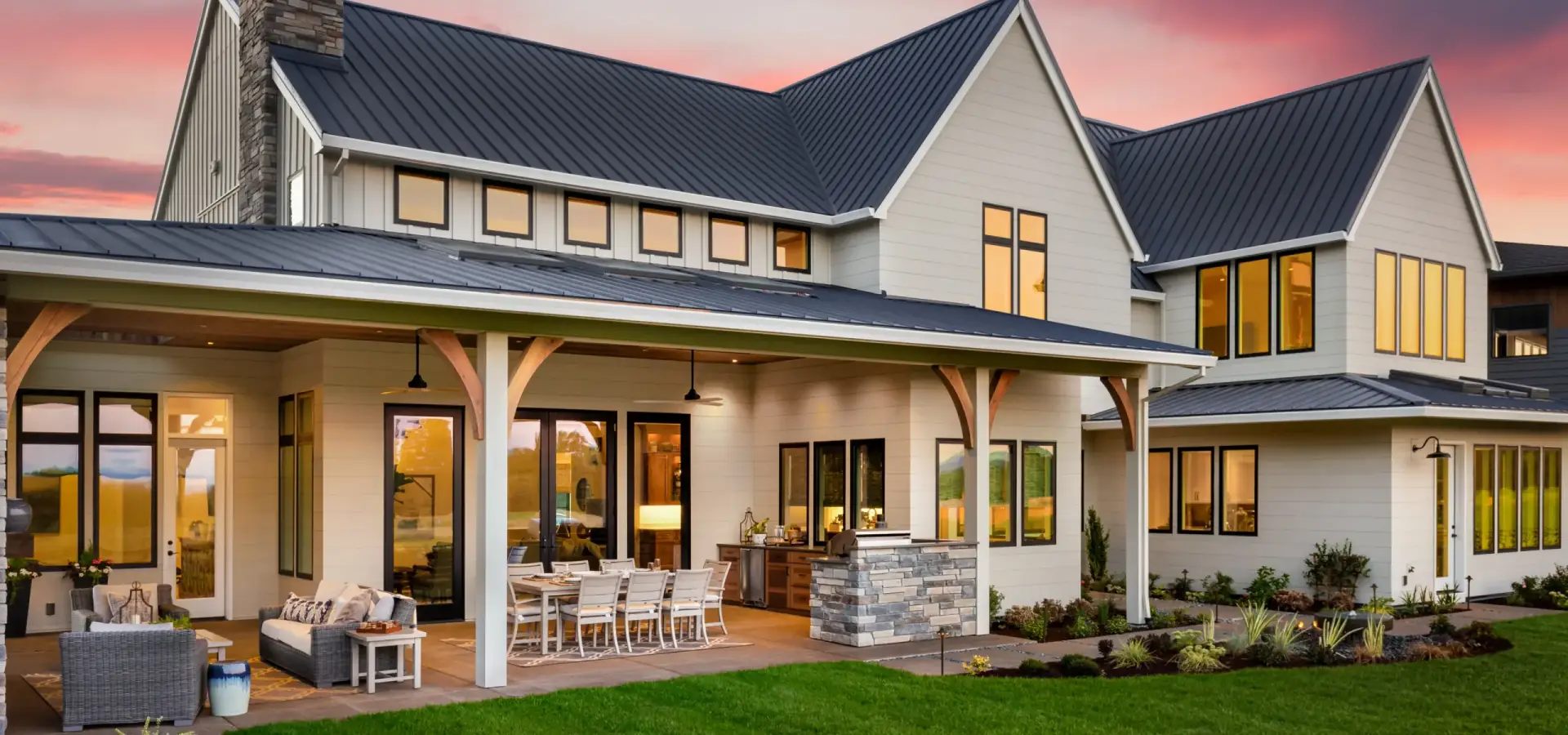
Start with the table, the favorite chairs and the way back inside. NightOak plans patio lighting for Moseley homes around the spaces you use now, with room to consider the planting and outdoor improvements you may add later.
Patio lighting helps a furnished outdoor space feel welcoming after dark. NightOak designs around where people sit, eat and walk, with garden accents supporting rather than replacing useful light in the occupied area.
We confirm the furniture layout and current planting before locating fixtures and planning cable access. We check the low-voltage supply and controls, seal copper-crimp connections in direct-burial gel-filled tubes and coordinate routes with any future landscape work. Nighttime aiming is reviewed from the seats and table, not only from the doorway.
The seating and dining plan should come first. A fixture positioned around an empty patio may face a chair once the space is furnished. Identify where people will sit, stand, eat and move, then consider how the surrounding garden and the route indoors fit that arrangement.
Consider faces, the tabletop and the view beyond the table together. Bright light across the seating area can make the space uncomfortable even if the paving is well lit. Shielding, mounting position and output should be selected for seated sightlines, with the final balance reviewed after dark.
A young landscape may not yet provide useful concealment or a suitable tree for overhead lighting. Plan around the conditions that exist, not just the mature landscape shown on a planting plan. Selected accents can be adjusted as the garden develops, and cable routes can be considered alongside future work.
Sometimes, depending on construction and wiring access. Integrated fixtures are easier to plan before a wall or step is completed, but an existing surface may have other suitable options. We assess the materials and access before recommending a method or promising that no disturbance will be needed.
They provide a visible overhead pattern, but they may not address every step, route or view. A patio design can combine them with discreet lighting for level changes and selected planting beyond the seating. Permanent bistro lighting also needs appropriate support and mounting, so it should be planned as its own part of the installation.
Compatible equipment may allow separate zones, schedules or dimming. The useful question is how you want the space to behave: dinner at the table, a quieter seating area or a lit route back indoors. We review the fixtures, transformer and controls before specifying those functions.
Set the priority area, identify any upcoming hardscape or landscaping work and discuss the routes that will be difficult to access later. A clear first-phase scope helps separate today’s installation from provisions for expansion. The estimate should reflect those choices and the actual site conditions.
Already have lights that are not working? Start with outdoor lighting repair.
Choose a priority to bring into your design conversation.
Think about faces, the tabletop and the garden beyond. Review the lighting from a seated position rather than judging the paving alone.
A conversation starter, not a site assessment, lighting simulation or estimate. Nothing is sent automatically.