
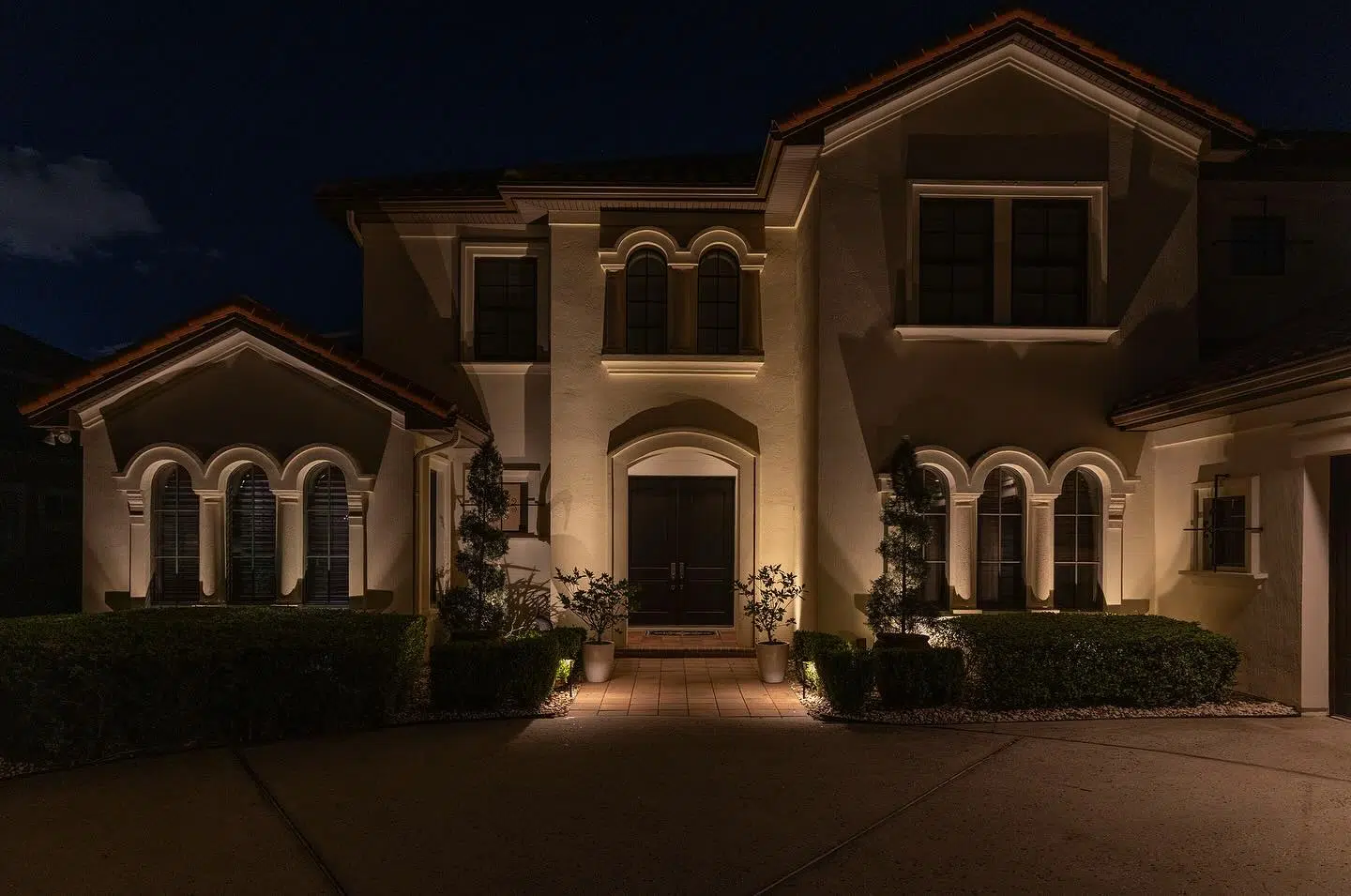
How can architecture stand out within a layered garden?
Mature trees, flowering gardens, and layered landscapes provide a rich setting for Wyndham homes. Architectural lighting gives the building a clear place in that view. Selected brickwork, stone, columns, or peaks can be emphasized without making each garden feature compete for attention.
Architectural lighting focuses on the building: its masonry, columns, entrance, and the proportions that make it distinctive. We use carefully aimed low-voltage fixtures to bring those features into view, leaving enough shadow to preserve depth.
How do you avoid competing focal points?
We choose a visual priority, then coordinate the output and beam shape of the supporting lights. If a tree is brighter than the entrance, the eye may move away from the home. Evaluating the whole composition helps retain depth and a comfortable transition between architecture and landscape.
Beam width, fixture position, and light output need to suit each surface. A narrow beam may suit a column, while a broader effect can connect sections of masonry. We assess the view from the street, driveway, and entrance as well as from inside the home.
What should be planned before installation?
We review planting beds, wiring routes, available power, and existing lighting equipment before recommending the system. Discreet wiring takes planning, and some digging or boring may be necessary. Tell us about upcoming planting or paving work so the lighting can be coordinated with it.
For an existing system, working fixtures may need different aiming or beam selection rather than more brightness. Flickering lamps or failed fixtures call for lighting repair. A design consultation is the right starting point when you want a different nighttime appearance.