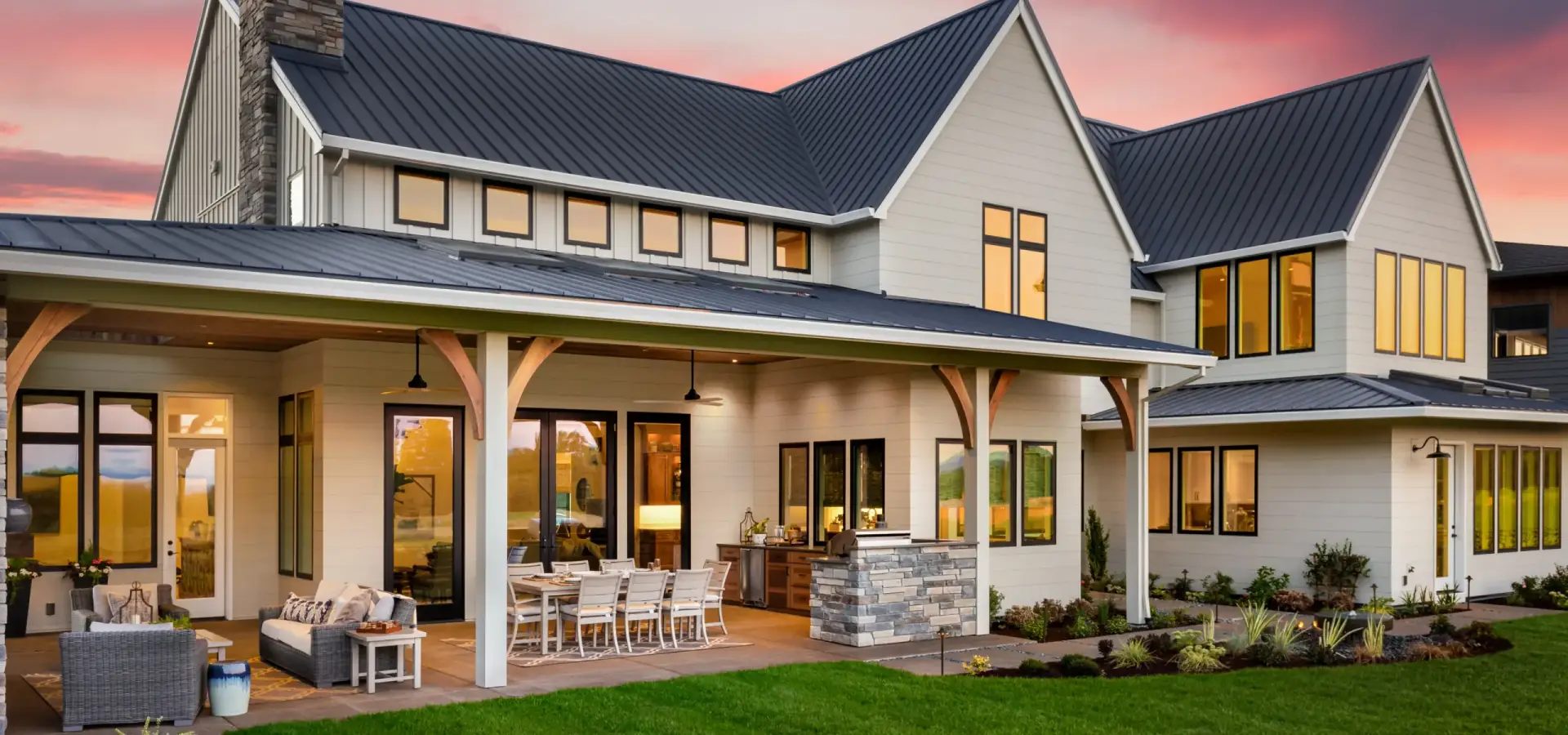
When a Chesterfield patio faces a wooded edge, the contrast between the sitting area and the background matters. NightOak can help plan a readable near landscape without treating every tree beyond the patio as something that needs a spotlight.
Patio lighting makes the occupied space and its immediate surroundings comfortable to enjoy after sunset. NightOak uses selected background accents without assuming the whole wooded edge should be illuminated.
We plan from the seating area outward, selecting the useful light and a deliberate stopping point. Cable routes and mounting positions account for garden access; the low-voltage supply and controls are checked before connections are protected in direct-burial gel-filled tubes. At night, we aim the fixtures and review the balance between the seats, steps and darker background.
Usually the useful starting point is the occupied area and its immediate surroundings. A few selected features may give the view depth, while more distant trees remain dark. Increasing background brightness can make the whole setting more demanding to balance.
Identify the garden edge, maintained path or other deliberate endpoint to evening use. Do not let the beam reach farther simply because a fixture can throw light that distance. The design should have a reason for illuminating each part of the view.
It can create strong contrast, especially beside a bright wall or overhead light. Before adding distant fixtures, reduce excessive brightness close to the seats and consider a softer intermediate accent. A gradual transition may be more comfortable than lighting the entire backdrop.
Changing branch shadows can be attractive on a garden bed but distracting on a walking surface. Give steps and important transitions a dependable source that does not rely entirely on light passing through foliage. Assess the route separately from the decorative tree treatment.
Yes. Open branches can reveal lamps and expose views that summer foliage concealed. Check aiming toward the property boundary and the house in both conditions. Seasonal variation is a design consideration, not a reason to assume foliage will always block unwanted light.
Keep fixtures accessible and discuss areas where leaves collect or maintenance equipment passes. The lighting plan should account for ordinary grounds care and accessible wiring connections. A lamp buried in seasonal debris cannot deliver the intended effect and needs attention.
Already have lights that are not working? Start with outdoor lighting repair.
Choose a question to prepare a note for your design conversation.
Usually the useful starting point is the occupied area and its immediate surroundings. A few selected features may give the view depth, while more distant trees remain dark. Increasing background brightness can make the whole setting more demanding to balance.
A conversation starter, not a site assessment, lighting simulation or estimate. Nothing is sent automatically.