
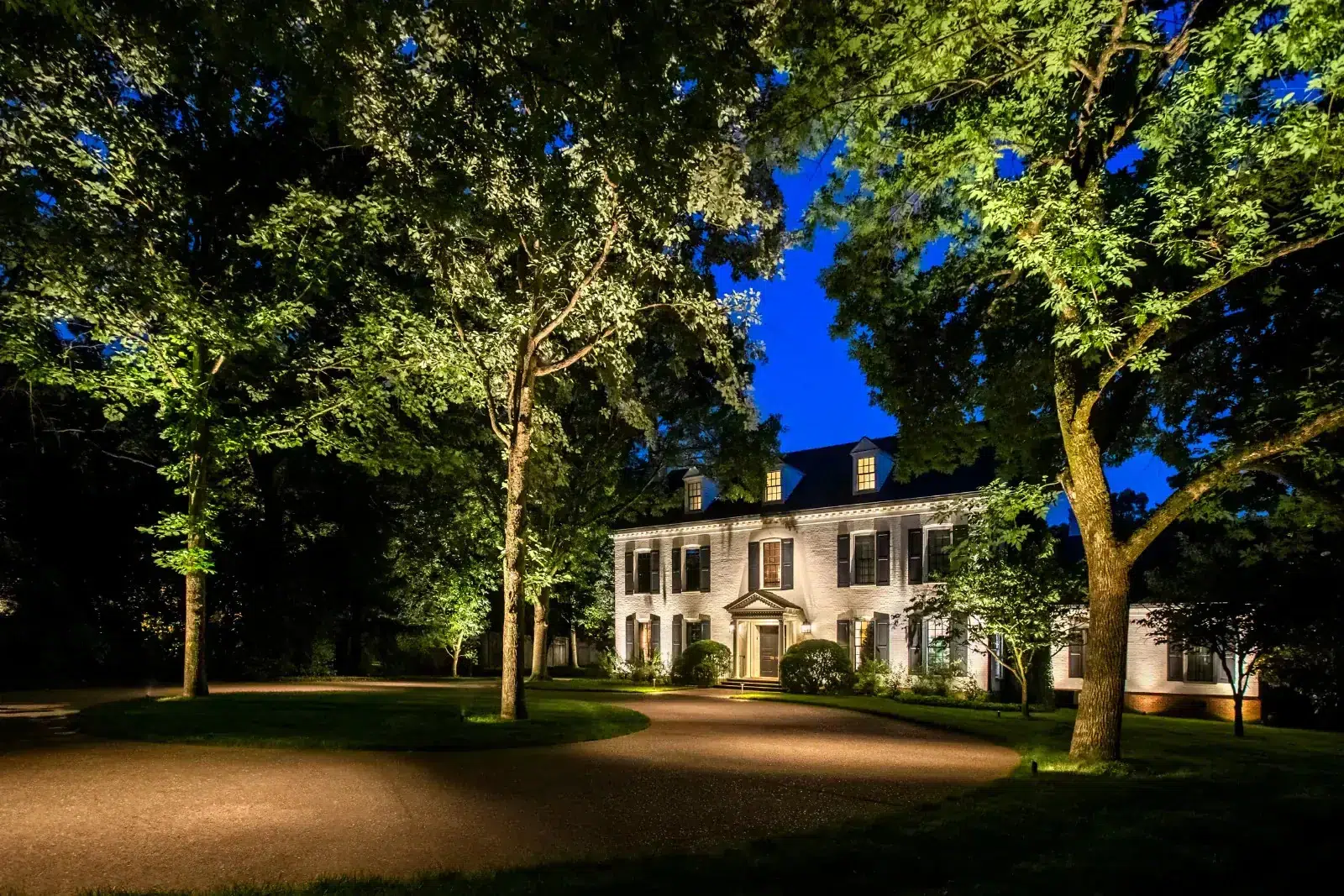
What makes established planting important to the design?
Uplighting uses low-mounted fixtures aimed upward to reveal tree forms and architectural details. Mature landscapes offer strong forms to illuminate, but they also call for care in fixture placement. Roots, dense beds and seasonal growth can affect where a light can be installed and how its beam reaches the tree.
For established homes around the Historic District and Buford Road neighborhoods, we start with the actual tree structure, garden layout and views from the house. Cable routes and protected connections are planned around those conditions, with existing equipment capacity checked before adding lights.
Should the canopy or the garden lead the view?
That depends on what you enjoy seeing from the house and outdoor spaces. A canopy can provide a backdrop, while a smaller tree or architectural detail creates a closer focal point. The two should not compete for equal brightness.
We consider height, branching and surrounding plants when selecting beam spread and aiming. Keeping some beds quieter can help the most distinctive tree form remain clear.
How do we protect views from windows?
Fixture visibility is checked from the rooms and outdoor seats you use. A light aimed correctly at a tree can still be uncomfortable if the source is exposed along a window sightline. Placement, shielding and output all matter.
The final nighttime review helps identify those issues and refine the balance. It also shows how shadows and reflections behave in conditions that cannot be judged fully in daylight.
Can existing lighting be part of the new plan?
We review the existing equipment and effect before recommending additions. A new tree accent should be considered alongside existing architectural lighting, garden beds and walking routes, rather than installed as an isolated bright point.
Plant growth and later landscape work can change the result. Leave maintenance access and plan to revisit aiming when the canopy or surrounding beds change.