
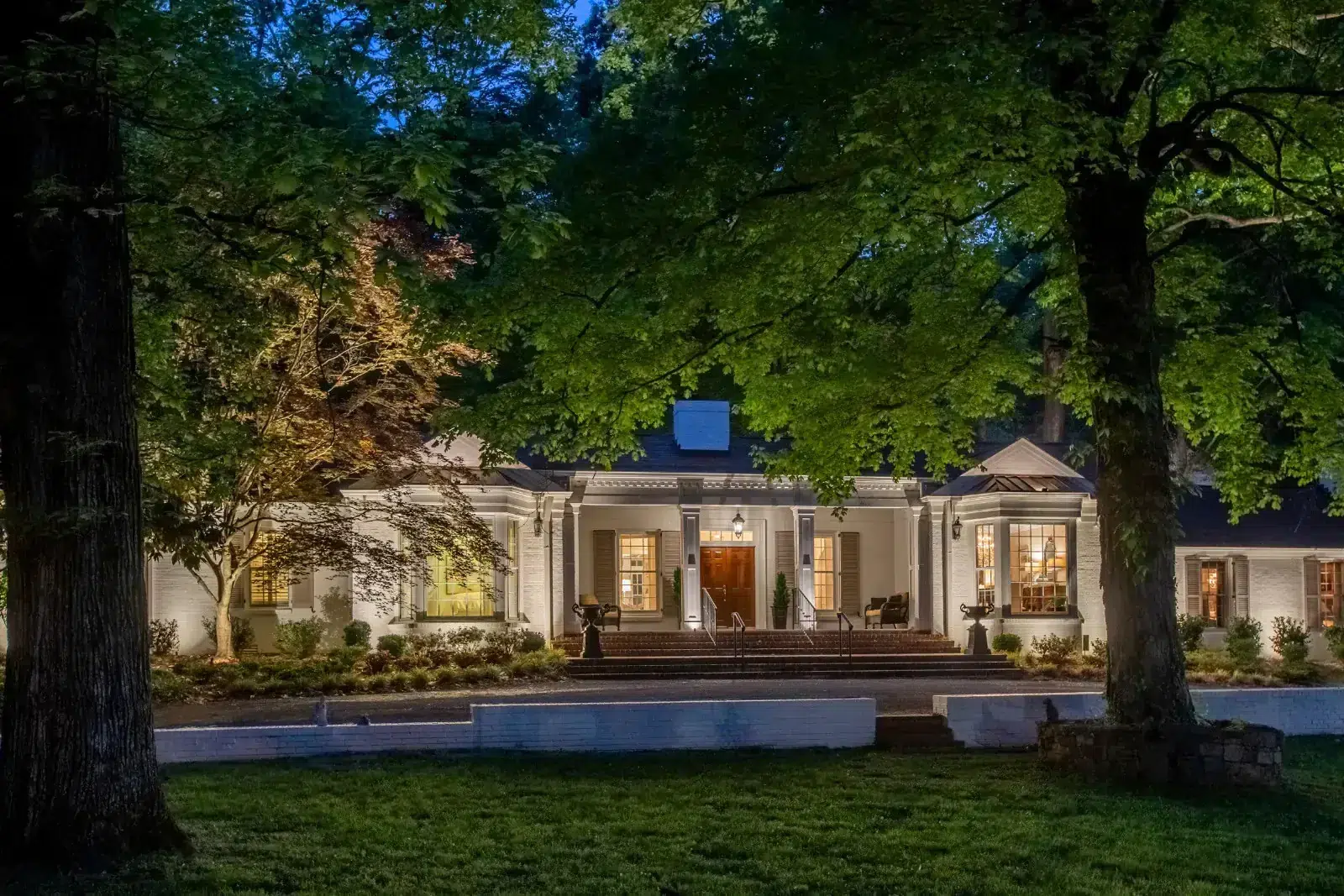
Which architectural details matter most on arrival?
A longer drive and a compact front walk create different views of a Glen Allen home. We consider where guests park, how they approach, and which parts of the building they actually see. Those observations help choose the entrance, masonry, or columns that deserve emphasis.
Architectural lighting focuses on the building: its masonry, columns, entrance, and the proportions that make it distinctive. We use carefully aimed low-voltage fixtures to bring those features into view, leaving enough shadow to preserve depth.
How do grades and window sightlines change the plan?
A change in ground level can expose a lamp that would be concealed on a flatter site. Windows and nearby neighbors also influence aiming and shielding. We review these conditions before setting fixture positions, rather than selecting a uniform arrangement for the entire elevation.
Beam width, fixture position, and light output need to suit each surface. A narrow beam may suit a column, while a broader effect can connect sections of masonry. We assess the view from the street, driveway, and entrance as well as from inside the home.
What should be planned before installation?
We review planting beds, wiring routes, available power, and existing lighting equipment before recommending the system. Discreet wiring takes planning, and some digging or boring may be necessary. Tell us about upcoming planting or paving work so the lighting can be coordinated with it.
For an existing system, working fixtures may need different aiming or beam selection rather than more brightness. Flickering lamps or failed fixtures call for lighting repair. A design consultation is the right starting point when you want a different nighttime appearance.