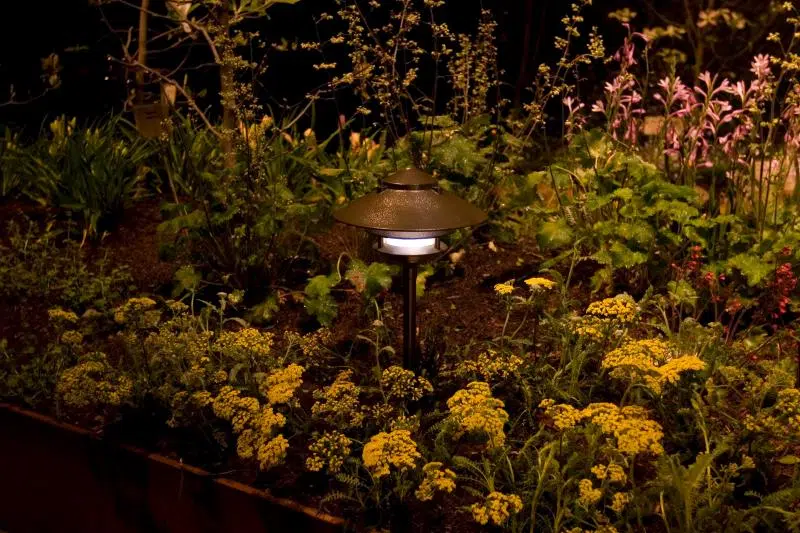
Enjoy the texture of your planting, the shape of a favorite shrub, and the view beyond your windows. NightOak designs garden lighting for Richmond-area homes with a considered balance of light and shadow.
Garden lighting brings selected planting beds, shrubs and landscape details into the evening view. Rather than illuminating every plant equally, the design creates layers: a feature to draw the eye, softer light nearby, and shadow that gives the scene depth. It can connect with trees, pathways and outdoor living areas as part of one landscape-lighting plan.
Choose a starting point for your garden. Each choice highlights a different design priority to discuss during your consultation.
Start with the views from your favorite rooms. Select a few planting features beyond the glass, then consider reflections and the position of the lights so the garden remains comfortable to look at.
A design conversation starter, not a lighting simulation, fixture schedule or price estimate. Nothing is submitted automatically.
Begin with the features you enjoy most and the places from which you see them. A sculptural shrub, ornamental grasses, a textured wall or a planting bed beside the house may deserve attention. Leaving some areas darker helps the illuminated features stand out and keeps the garden from feeling flat.
Tree uplighting often emphasizes a trunk, branching structure or canopy. Garden lighting works closer to the ground and across smaller planting layers. The techniques can complement each other, but fixture output, beam spread and placement should suit the subject rather than repeat one treatment across the entire yard.
We consider the viewing angle, shielding, beam direction and brightness together. Fixtures are aimed toward the intended feature, with attention to windows, seating and neighboring properties. Warm light alone does not prevent glare. Placement and nighttime adjustment matter just as much.
Yes. Existing plants, roots, irrigation and access for garden care all influence the design and cable routes. Fixture positions should leave room for pruning, mulching and seasonal growth. The appropriate arrangement is assessed on the property rather than chosen from a standard spacing formula.
New growth can hide a fixture or change where its beam lands. Periodic cleaning, aiming adjustments and a review after major landscaping help preserve the intended effect. A fixture that has shifted may need repositioning; one that flickers or stops working needs a service assessment.
Often, but the transformer, wiring, controls and available capacity need to be checked first. We also consider whether the new fixtures will coordinate with the existing light. If the current system is failing, start with a repair assessment before planning an expansion.
The number of areas, fixture selection, access, cable routes and condition of any existing equipment all influence the scope. A focused planting bed and a layered garden across several outdoor spaces need different designs. A consultation provides the basis for a property-specific estimate.
Already have lights that are not working? Start with lighting repair.
We review the property, the views you enjoy and how you use the space after dark.
Fixture placement, wiring, controls and the setting are considered together in the design and installation.
Nighttime fine-tuning helps balance aiming and brightness. Service and maintenance options support ongoing care.
Explore planning questions for your community. This page covers our Richmond-area approach.
Explore all service areas →