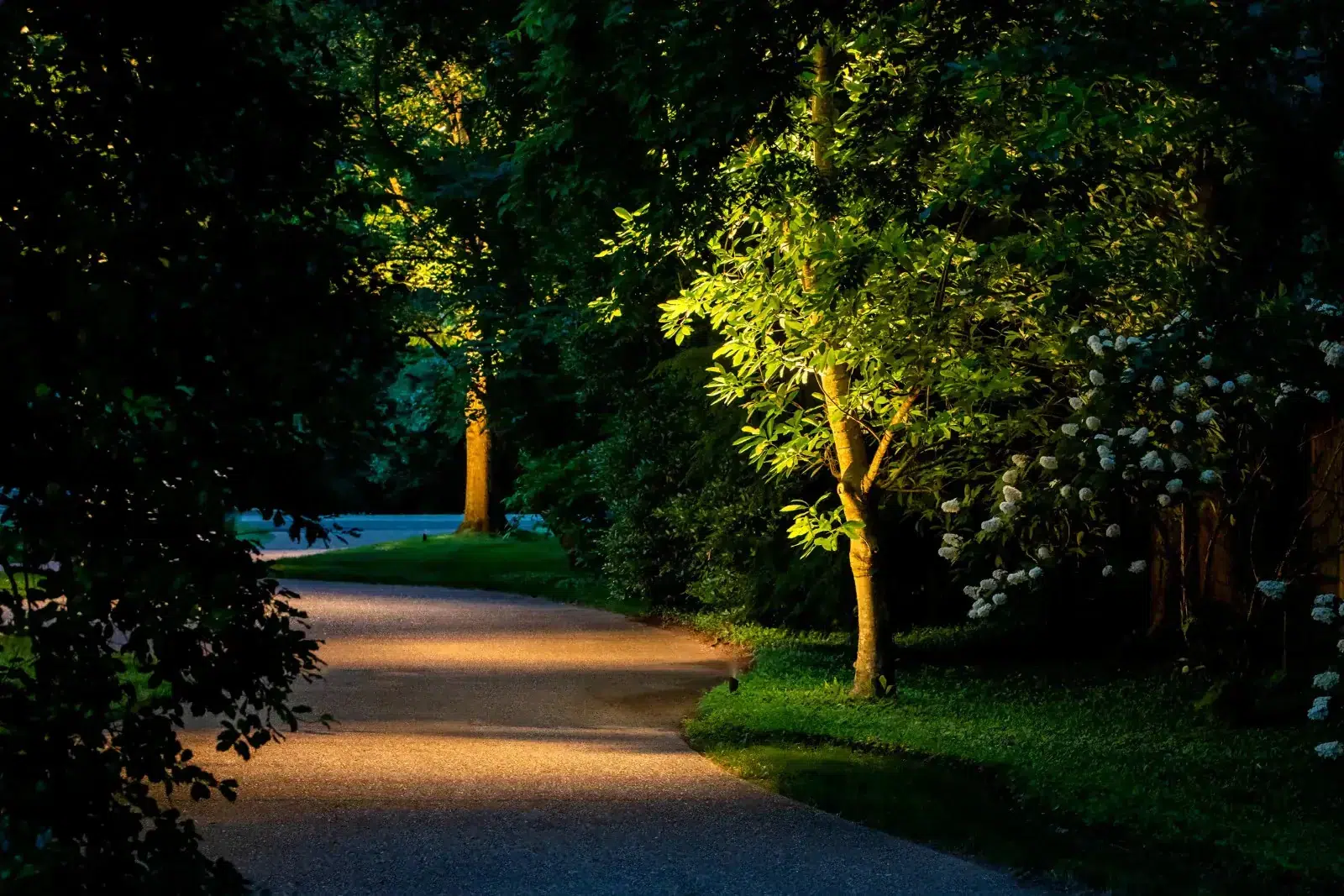
A branching silhouette. The texture of a trunk. A canopy that gives the garden its character. NightOak designs tree uplighting around the living features that make your Richmond-area property distinctive.
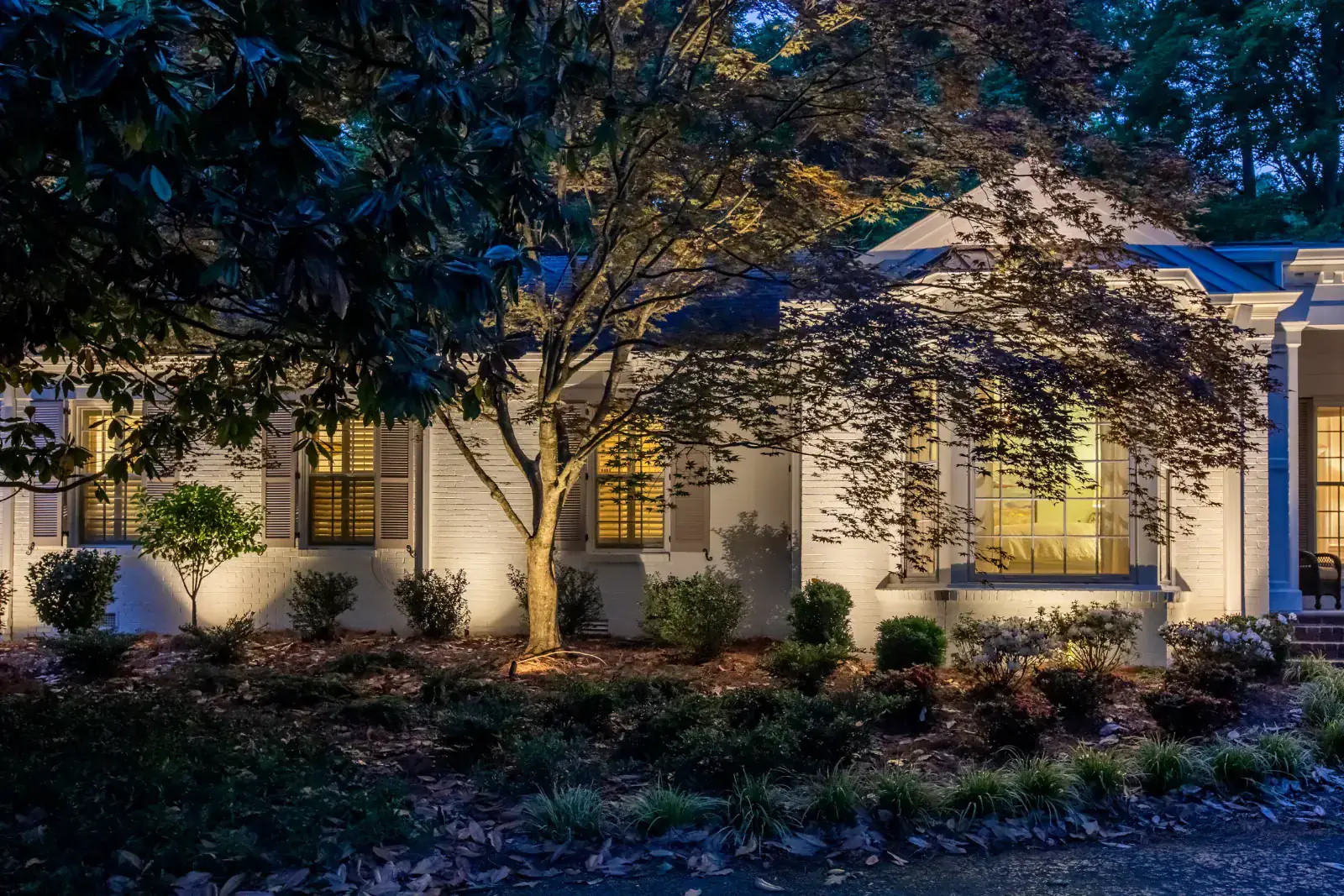
Tree uplighting places light below a tree and directs it toward selected parts of the trunk, branches or canopy. The design responds to the tree's form and the places from which you see it. A restrained accent can reveal a sculptural specimen, while a considered group of trees can give the wider landscape depth after dark.
Choose the feature you love most. Explore a starting point for lighting its natural character.
The trunk and branching structure may be the main feature. Viewing angle and seasonal foliage influence which parts can be revealed, so the design should consider the tree with and without its leaves.
A design conversation starter, not a lighting simulation, tree assessment or fixture-count estimate. Nothing is submitted automatically.
A narrow accent and a broad wash can come from very different optics. Explore how the beam angle and distance to a feature change the width of the light.
Measured from the light to the feature along the center of the beam, not along the ground.
A middle-width beam can reveal branching structure or a defined architectural feature. Placement and output complete the effect.
An illustration of beam geometry, not a brightness or coverage guarantee. Width = 2 × distance × tan(beam angle ÷ 2), on a flat surface perpendicular to the beam. Real light fades at the edges; fixture optics, output, aiming, foliage and surface shape affect the result. We refine the design on your property.
Start with the trees that matter to the view: a specimen near the entrance, a mature tree beside the patio or a group that frames the garden. Trunk character, branching structure, foliage, size and viewing distance all influence the effect. We assess the actual tree and setting rather than assume every tree needs the same treatment.
There is no reliable one-light-per-tree rule. A narrow tree, an open ornamental tree and a broad mature canopy present different surfaces and viewing angles. Fixture output, beam spread, placement and the desired emphasis determine the layout. A design assessment is more useful than a fixture count based only on height.
The light's position, direction and distribution need to match the feature being emphasized. A fixture placed too close or aimed without considering the whole tree can concentrate light in one area. We consider the scene from the primary viewing positions and refine aiming and balance after dark.
The design accounts for roots, surrounding planting, irrigation, maintenance activity and practical cable routes. We choose fixture positions and installation methods after reviewing the tree, access and existing landscape conditions. Those details matter as much as the nighttime appearance.
Yes. A deciduous tree's foliage changes the way light reaches and reflects from its branches through the seasons. An evergreen's density and shape create another set of choices. The design should respond to those differences and allow for future growth, pruning and aiming adjustments.
Tree uplighting directs light upward to reveal the tree itself. Moonlighting directs light downward from a suitable elevated position, often through a canopy, to illuminate the scene below. The two techniques have different purposes and may be used together where the site and design support it.
The number and scale of the selected trees, viewing angles, fixture choices, cable routes and existing-system conditions affect the scope. Care can include lens cleaning, checking shifted fixtures and adjusting the design as trees grow. If adding to an existing system, transformer capacity, wiring and controls need review first.
Already have lights that are not working? Start with lighting repair.
We review the property, the views you enjoy and how you use the space after dark.
We choose beam spread and fixture positions for the tree’s form, plan low-voltage cable routes around roots and existing landscape features, and check transformer and control requirements. Protected connections and discreet wiring support the installation.
Nighttime fine-tuning helps balance aiming and brightness. Service and maintenance options support ongoing care.
Explore planning questions for your community. This page covers our Richmond-area approach.
Explore all service areas →