
What went dark after the yard work?
If your low-voltage landscape lights stopped working after edging, planting, or other work in the yard, start by noting which lights went out and where the work happened.
Start with what changed
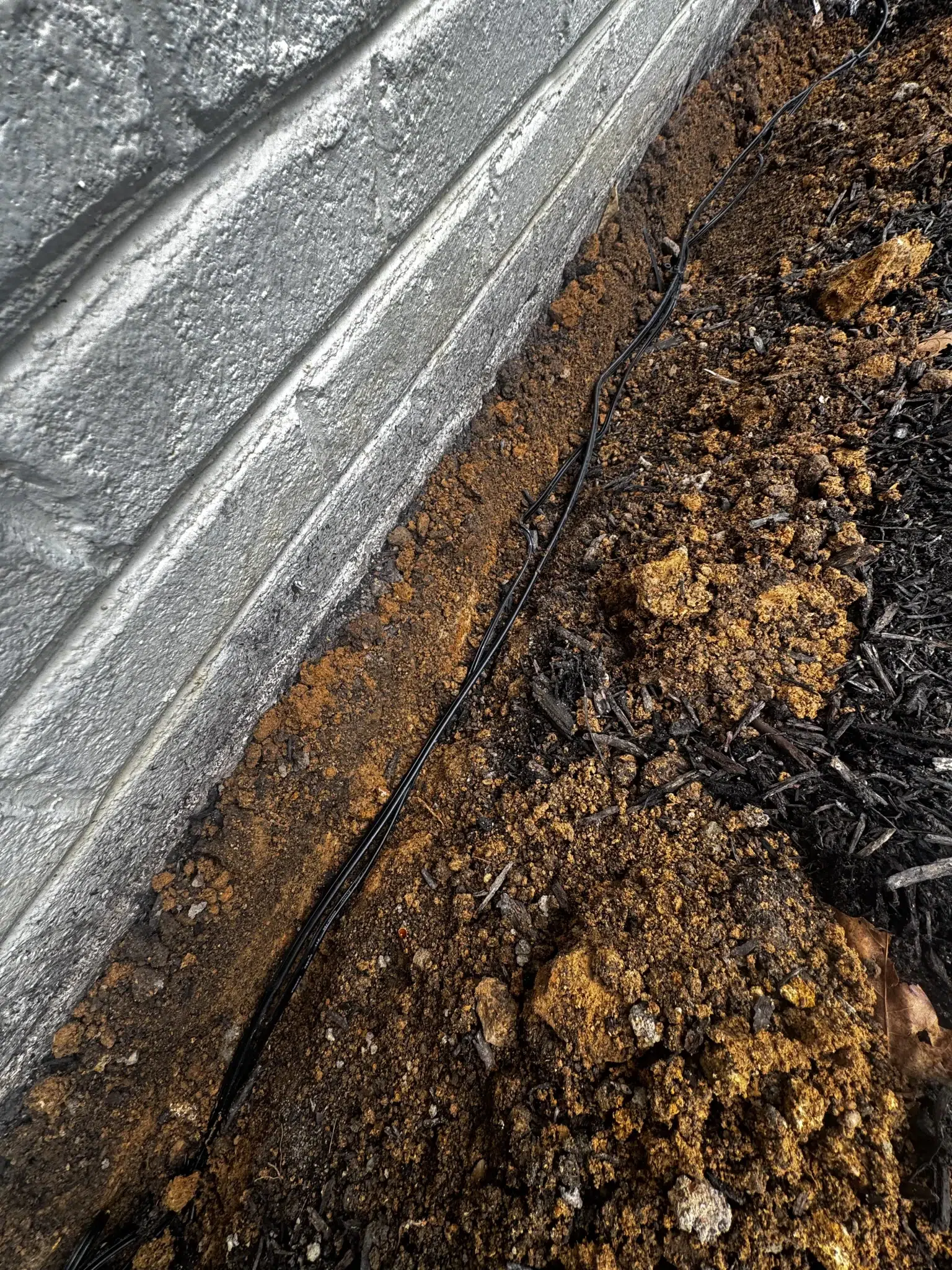
A row of dark path lights after edging is useful information. So is a single fixture that stopped working in a freshly planted bed. Tell your technician when you last saw the lights working, whether the outage is constant, and whether the rest of the property still lights up.
Recent digging can point to a damaged cable, but an outage can also involve a connection, fixture, timer, or transformer. The pattern helps us decide where to begin testing.
One fixture, a group, or the whole system?
One light is out
Note the fixture location and whether it was moved, hit, or covered. If you can see physical damage, photograph it from a safe distance.
A row or section went dark
Note the first and last affected fixtures and where the landscaping crew worked. Tell us which nearby fixtures still operate.
Everything is out
Let us know if the outage coincided with a storm, a schedule change, or yard work. Share the normal timer or app settings if you know them.
Lights flicker or come and go
Tell us whether it happens at startup, after rain, or at another repeatable time. A short video can help illustrate what you’re seeing.
Give your technician a starting point

A wide photo of the affected area is more useful than a close-up alone. Include landmarks such as the patio corner, driveway edge, or the spot where a new shrub went in. If a landscaper knows exactly where damage occurred, pass that location along.
Leave damaged wiring and electrical enclosures alone. If more digging is planned, see Virginia 811 and ask your contractor about locating private lines. Our wire burial guide explains how cable routing affects future service.
Known repair or diagnostic?
For a known issue at a specific location, our $150 Repair Service Visit includes the trip and up to 30 minutes of repair labor. For an outage with an unknown cause, the $279 Complete System Diagnostic includes up to 60 minutes of on-site testing for one reported issue. See the repair service options for current coverage and what is quoted separately.
Common questions from homeowners
Can yard work cut landscape lighting wire?
Yes. Edging, digging, and planting can damage buried landscape lighting cable. The timing and location of the work help narrow the search, but testing is needed to confirm the cause.
Should I book a repair or a diagnostic?
Choose a Repair Service Visit when the issue and location are known, such as a visible cut in a specific spot. Choose a Complete System Diagnostic when a group of lights goes out and you do not know why.
What photos should I send?
From a safe location, take a wide photo of the affected area, a photo of where the work occurred, and a photo of the outside of the transformer if it is accessible. Photos are optional.
Does NightOak work on systems it did not install?
NightOak services many existing residential low-voltage landscape lighting systems. We confirm what can be repaired based on the system condition and availability of compatible parts.
Get your outdoor lights working again.
Tell us what changed and which lights are affected. We’ll help you choose the right visit for your system.
See repair and diagnostic options →