
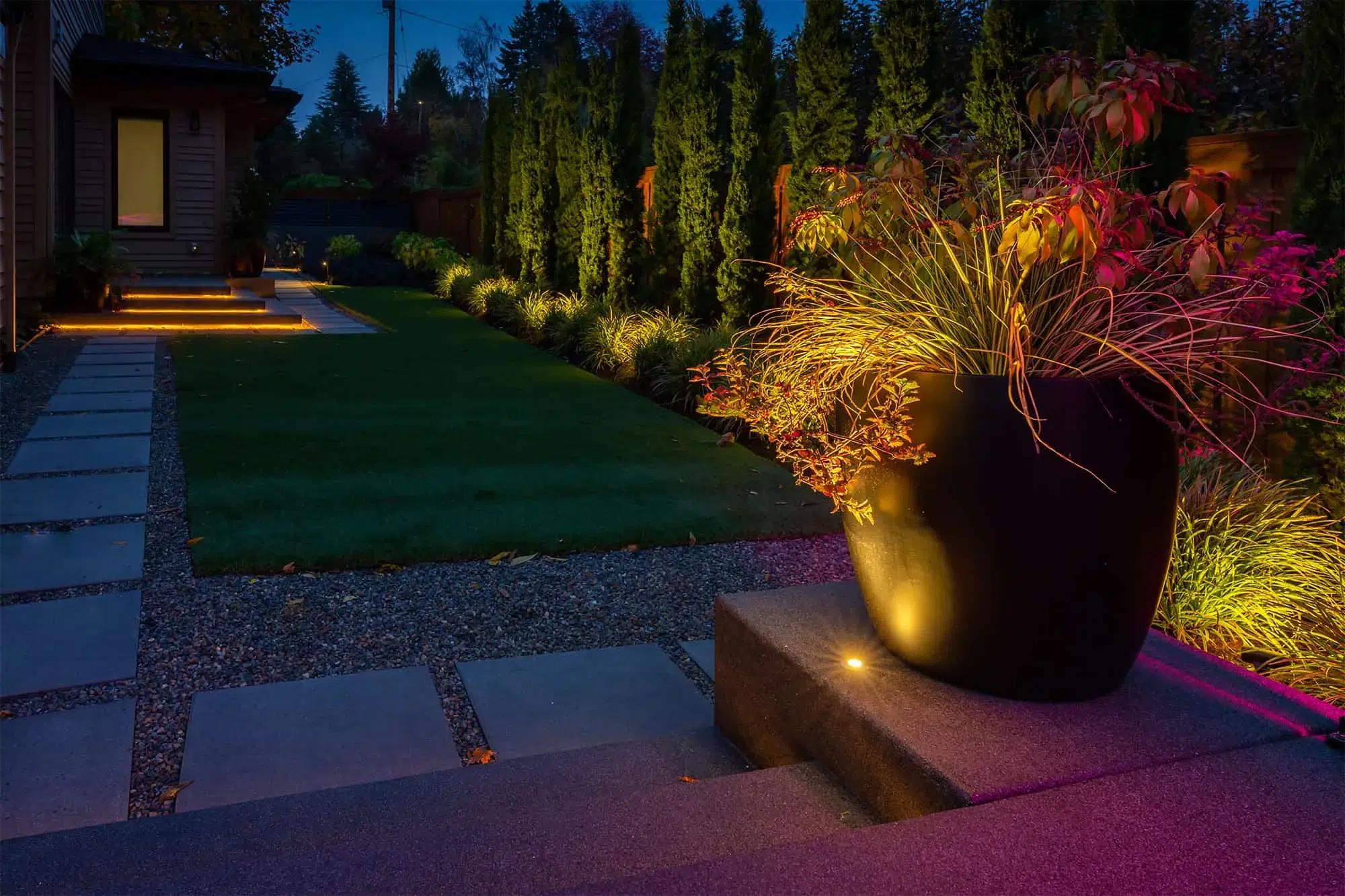
5 Key Principles for Effective Outdoor Lighting
Great outdoor lighting isn't about how many fixtures you install. It's about knowing where light belongs, how it should feel, and when to let darkness become part of the design.
Explore the Principles Try the Design PlannerThe most memorable outdoor lighting designs have something in common: they look effortless.
The architecture feels more defined. Mature trees become focal points. Pathways are comfortable to navigate. Outdoor spaces feel welcoming without appearing overly bright.
That result doesn't happen by placing fixtures wherever there's an available outlet or an empty planting bed.
At NightOak Outdoor Lighting, we approach each property as a complete nighttime environment. These five principles explain the decisions behind a thoughtfully designed system.
Illuminate With Purpose
Before choosing a fixture, determine what deserves attention.
A home's stone facade, a distinctive entryway, or a mature specimen tree may become the foundation of the entire lighting design.
The goal is to guide the eye through the property naturally, rather than give every surface the same amount of light.
Architectural Features
Highlight columns, stonework, entryways, and distinctive structural details.
Landscape Features
Showcase mature trees, ornamental plantings, and carefully composed gardens.
Layer Light to Create Depth
Outdoor lighting becomes more compelling when different techniques work together.
Instead of relying on a single fixture type, professional designs combine light from different positions and directions.
Uplighting
Directs light upward to emphasize trees, architectural details, and vertical surfaces.
Downlighting
Places light above the area being illuminated, often producing a natural moonlight-inspired effect.
Path Lighting
Provides gentle illumination for walkways, transitions, and garden circulation.
Accent Lighting
Introduces carefully controlled highlights to smaller landscape and architectural features.
The combination creates visual depth, helping the property feel dimensional rather than flat.
Explore our outdoor lighting design and installation services to see how different techniques fit into a complete system.
Choose the Right Color Temperature
The color of white light has a significant influence on how a property feels at night.
Warmer white light tends to create a softer, more inviting residential atmosphere. Cooler white light can make surfaces appear more stark, depending on the application.
Why NightOak Often Uses 2700K
For many residential projects, NightOak prefers approximately 2700K warm-white lighting.
This color temperature often complements brick, natural stone, wood, and established landscapes. It also helps maintain a consistent appearance across the property.
Use the interactive comparison later in this article to explore how warm and cool white light can change the mood of a home.
Control Glare and Respect Darkness
More brightness does not automatically create a better lighting design.
Poorly positioned fixtures can create uncomfortable glare, distract from the architecture, or spill unnecessary light into neighboring properties.
Fixture Placement Matters
The position and aiming of each fixture should account for how people experience the property—from the street, driveway, windows, patios, and walking paths.
Shielding and Beam Control
Appropriate optics, louvers, and shielding can help direct light toward the intended feature while limiting direct views of the light source.
Darkness Is Part of the Design
Leaving selected areas unlit creates contrast. That contrast gives illuminated features greater visual impact.
Design for Long-Term Performance
A lighting system should continue to perform well long after installation day.
That requires more than selecting attractive fixtures.
Quality Components
Durable fixtures, appropriate transformers, and serviceable components support long-term reliability.
Professional Wiring
Proper cable sizing, voltage planning, and protected connections help systems operate as intended.
Thoughtful Controls
Timers, compatible smart controls, and lighting zones can make a system easier to operate.
Ongoing Maintenance
Cleaning, fixture adjustments, voltage checks, and inspections help preserve performance as landscaping changes.
NightOak also considers future serviceability when designing new systems, helping homeowners maintain and adapt their lighting over time.
For more information about system components, read our low-voltage landscape lighting guide .
Build Your Outdoor Lighting Vision
Select the part of your property you'd most like to enhance. We'll show which lighting techniques may be worth considering.
Choose one of the property features above to discover potential lighting techniques.
See How Light Changes the Atmosphere
Explore a simplified architectural illustration comparing warm white, cool white, and restrained accent lighting.
Warm white 2700K creates a soft, welcoming residential atmosphere.
Conceptual illustration only. Actual color rendering, brightness, and beam patterns vary by fixture and installation.
What Should Homeowners Consider Before Installation?
An effective outdoor lighting design starts with a clear understanding of the property and the homeowner's goals.
During planning, consider the most important viewing angles, how outdoor spaces are used, existing electrical infrastructure, preferred controls, and long-term maintenance.
Budget also matters. Professional outdoor lighting costs vary based on fixture selection, wiring, installation conditions, and system complexity.
Explore NightOak's Outdoor Lighting Pricing Guide and financing options to help plan your project.
Frequently Asked Questions
What is the most important principle of outdoor lighting?
Purposeful placement is a strong starting point. Determine which features deserve attention before selecting fixtures or planning cable routes.
How many outdoor lights does a house need?
There is no universal fixture count. The appropriate number depends on architecture, landscaping, desired effects, fixture output, and placement.
Is 2700K good for outdoor lighting?
Yes. Approximately 2700K warm-white lighting is a popular choice for residential architecture and landscaping. The best temperature depends on the property and desired mood.
How do you prevent glare from landscape lights?
Careful aiming, appropriate beam angles, shielding, louvers, and thoughtful fixture placement can help reduce direct glare.
Should outdoor lighting be bright?
It should be bright enough for its intended purpose, but excessive brightness can create glare and reduce visual balance. Layered, controlled lighting often produces a more refined result.
Does professional outdoor lighting need maintenance?
Yes. Cleaning, adjustments, inspections, and occasional service help maintain the appearance and performance of outdoor lighting systems.


