

Stop Counting Lights. Start Looking at the Design.
Why the number of fixtures on a proposal tells you surprisingly little about the quality, performance, or value of your outdoor lighting investment.
Ten Lights. Twenty Lights. What's the Difference?
When comparing outdoor lighting proposals, homeowners often focus on one number: how many fixtures are included.
It's understandable. A proposal offering 20 lights for a certain price can appear more attractive than one offering 12 lights for a similar investment.
But outdoor lighting isn't a product that should be evaluated by quantity alone. It's a carefully planned combination of light placement, fixture performance, electrical design, installation methods, and artistic judgment.
More fixtures don't automatically mean better lighting.
At NightOak Outdoor Lighting, we design custom systems for homes throughout Richmond, Midlothian, Chesterfield, Goochland, Powhatan, and surrounding communities. Our goal isn't to sell the greatest number of lights. It's to create the right nighttime experience for each property.
Why Price Per Fixture Can Be Misleading
Imagine receiving two proposals for the same property. Both companies are recommending professional outdoor lighting, but their fixture counts and prices differ.
The Fixture-Count Approach
- 20 fixtures included
- Emphasis on the number of lights
- Standardized fixture placement
- Limited discussion of beam angles or glare
- Design decisions driven by package quantity
The Design-First Approach
- 12 carefully selected fixtures
- Placement based on architecture
- Appropriate beam spreads and output
- Thoughtful control of glare and shadows
- Design decisions driven by the desired result
Which proposal is better? You can't determine that from the fixture count alone. Either could be appropriate depending on the property, equipment, installation scope, and actual design.
The point is that counting fixtures without understanding what each one accomplishes is an incomplete way to compare proposals.
What You Should Compare Instead
Ask how each fixture contributes to the overall design, what materials are being used, how the system will be installed, which controls are included, and what service or warranty support is provided afterward.
Six Details That Matter More Than Fixture Count
Intentional Placement
The direction, distance, and positioning of a fixture determine what it reveals. A thoughtfully placed light can highlight an architectural feature without introducing unnecessary glare.
Beam Angle & Light Output
A narrow beam and a wide flood produce very different effects. Selecting the right optical characteristics can reduce the need for extra fixtures.
Fixture Construction
Professional fixtures vary in durability, adjustability, serviceability, and available accessories. These differences influence both cost and long-term ownership.
Wiring & Connections
Proper cable routing, protected connections, mounting methods, and transformer planning contribute to reliable performance.
Glare & Shadow Control
Good design considers where people will see the light from, not just what the fixture illuminates. Darkness and contrast are part of the composition.
Service & Maintenance
Accessible components, manufacturer support, and a clear maintenance plan can make a meaningful difference over the life of the system.
Sometimes Less Light Creates a Better Result
One of the most important skills in professional outdoor lighting is knowing where not to place a fixture.
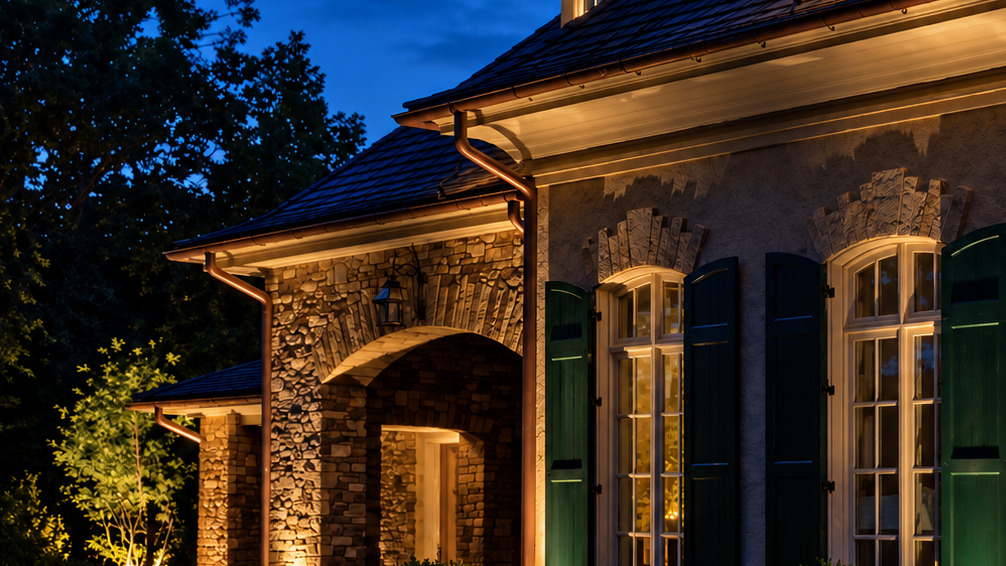
Too many bright lights can flatten architectural details, create unwanted glare, and eliminate the depth that makes nighttime lighting compelling.
By balancing illuminated surfaces with intentional shadow, a designer can create contrast and dimension without overwhelming the property.
The goal isn't to make everything brighter. It's to make the right details stand out.
This is why fixture selection should follow the design, not the other way around.
Does a Higher Fixture Count Mean a Higher Cost?
Not necessarily. While additional fixtures typically increase equipment and installation costs, other factors can have an equally important impact on the total investment.
Long wiring runs, tree-mounted downlights, specialized mounting, transformer requirements, smart controls, and site accessibility all affect pricing.
A smaller project involving complex installation conditions may cost more than a larger, straightforward project.
Understanding Price Per Fixture
Dividing a proposal's total price by its fixture count produces a mathematical average, but that number includes much more than the fixtures themselves. It may reflect design, labor, cable, transformers, controls, accessories, and other project costs.
That's why homeowners should evaluate the complete scope of work rather than assuming the lowest average cost per light represents the best value.
Five Questions Every Homeowner Should Ask
Why These Fixtures?
Ask the designer to explain why each fixture type was selected and what it's intended to illuminate.
What Materials Are Included?
Understand the fixture construction, light sources, accessories, and electrical components being proposed.
How Will the System Be Installed?
Discuss wiring methods, mounting locations, connection protection, and transformer planning.
What Happens After Installation?
Review applicable manufacturer warranties, installation coverage, and ongoing service options.
Can the Design Grow?
Ask whether the system can accommodate future additions or different control zones if your needs change.
Designed for Your Home. Not a Package.
At NightOak Outdoor Lighting, our approach begins with understanding the property, the architecture, the landscape, and how the homeowner wants to use the space.
From there, we select the lighting techniques and equipment that best support the design.
That might mean carefully positioned architectural uplights, tree downlighting, subtle pathway illumination, or multiple lighting zones with compatible smart controls.
Every property is different, and the right fixture count should be a result of the design process rather than a predetermined sales package.
Explore our outdoor lighting services in Richmond, VA to learn more about the design and installation options available through NightOak.
A Note About Warranty Coverage
Qualifying complete new NightOak lighting systems include a two-year limited installation labor warranty, subject to written terms. Repairs, additions, and modifications to existing systems do not create or extend that coverage. Manufacturer product warranties apply separately.
Outdoor Lighting Pricing FAQs
Is outdoor lighting usually priced per fixture?
Some companies use per-fixture pricing or package structures, but custom proposals often account for design, equipment, wiring, labor, controls, and site conditions.
Is a package deal always a bad choice?
No. A package may suit a straightforward project. The important thing is understanding the quality, scope, installation methods, and design flexibility included.
Do more outdoor lights make a home look better?
Not automatically. Effective lighting depends on placement, beam selection, balance, and glare control rather than fixture quantity alone.
Why do outdoor lighting quotes vary so much?
Differences in fixture materials, design complexity, labor, wiring, transformers, controls, and warranty terms can lead to substantially different proposals.
Can I install outdoor lighting in phases?
Many properties can be designed for phased installation, beginning with priority areas and planning for future expansion where practical.
How do I compare two outdoor lighting proposals?
Compare the intended nighttime result, fixture specifications, installation scope, controls, serviceability, warranties, and total price—not just the number of lights.
Don't Just Buy More Lights. Invest in Better Lighting.
Discover what a thoughtful, professionally designed outdoor lighting system can bring to your Richmond-area home.
Explore NightOak Services Or call (804) 277-9296

