
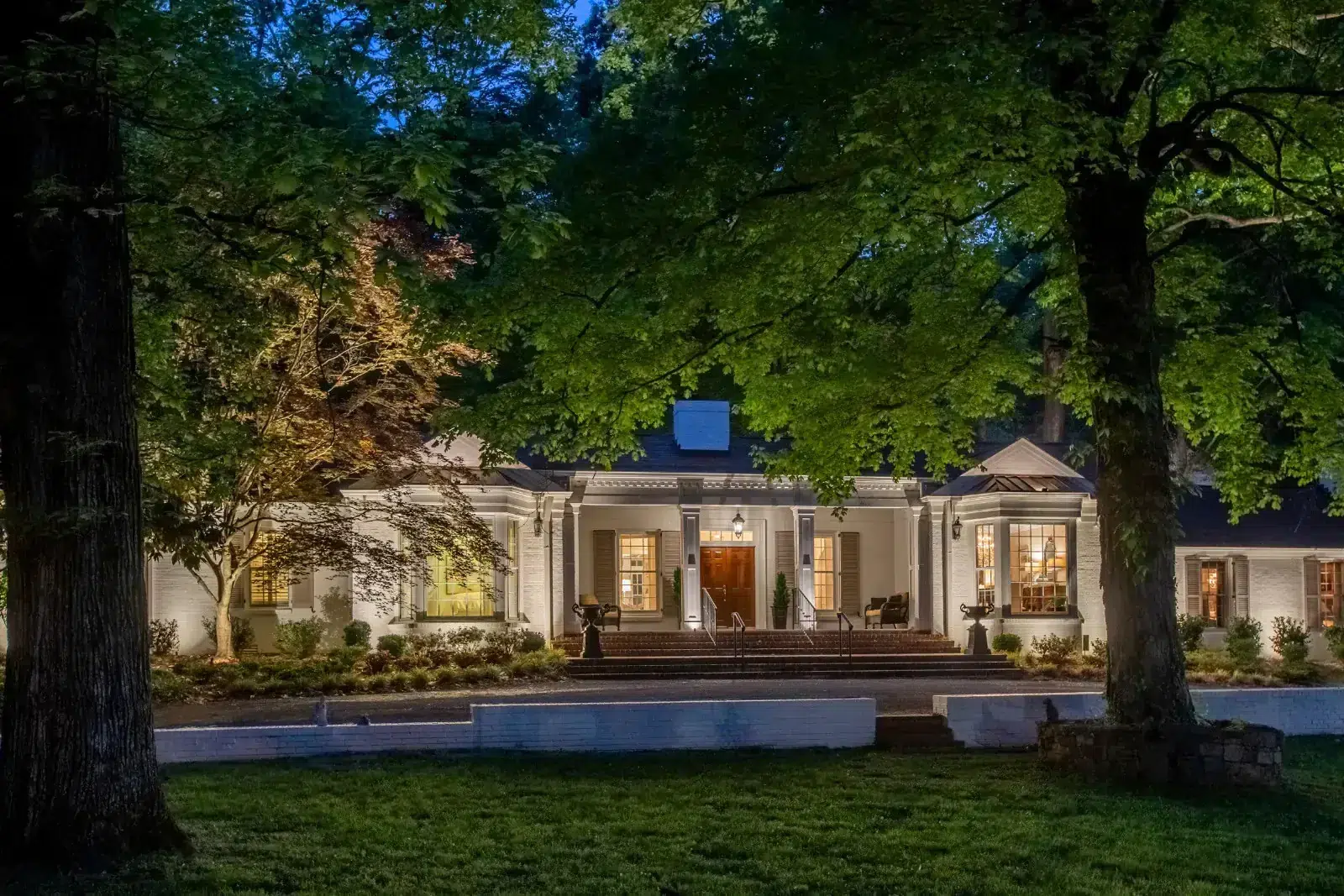
Does architectural lighting suit different Richmond home styles?
Richmond includes distinctive architecture, established gardens, and contemporary residences. The lighting should respond to the actual building. Textured brickwork calls for a different treatment than a smooth contemporary elevation, and neither benefits from simply making every surface bright.
Architectural lighting focuses on the building: its masonry, columns, entrance, and the proportions that make it distinctive. We use carefully aimed low-voltage fixtures to bring those features into view, leaving enough shadow to preserve depth.
What changes when a facade has both texture and clean lines?
We study which surfaces should reveal texture and which should read as a quieter backdrop. Fixture setbacks and beam angles affect the shadows in masonry. A different beam or position can soften a bright patch on a smoother wall. Trees and gardens should support this composition rather than obscure it.
Beam width, fixture position, and light output need to suit each surface. A narrow beam may suit a column, while a broader effect can connect sections of masonry. We assess the view from the street, driveway, and entrance as well as from inside the home.
What should be planned before installation?
We review planting beds, wiring routes, available power, and existing lighting equipment before recommending the system. Discreet wiring takes planning, and some digging or boring may be necessary. Tell us about upcoming planting or paving work so the lighting can be coordinated with it.
For an existing system, working fixtures may need different aiming or beam selection rather than more brightness. Flickering lamps or failed fixtures call for lighting repair. A design consultation is the right starting point when you want a different nighttime appearance.