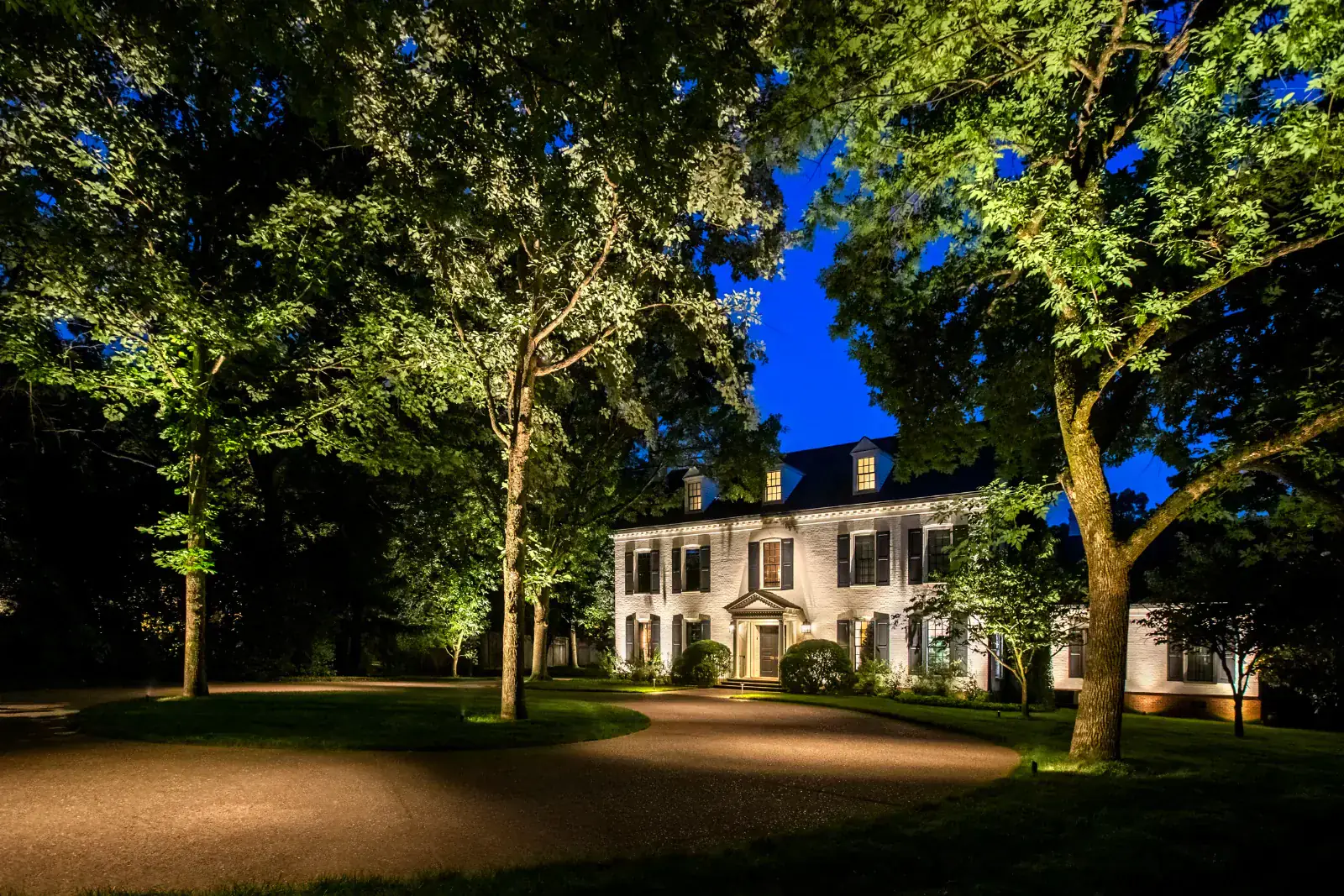
A Chesterfield entrance bordered by trees can feel very different with the garage open than with the house quiet for the night. If that describes your property, plan for both conditions. The aim is a readable arrival that does not depend on the brightest household lights staying on.
Driveway and entrance lighting defines the approach and the transition from parking to the home. NightOak balances useful arrival light with landscape accents, so the wooded backdrop does not become the brightest part of the scene.
We review the approach with the garage closed, then select fixture positions and beams for the surfaces that need light. Cable routes, transformer capacity and controls are planned before installation. Protected copper-crimp connections sit inside direct-burial gel-filled tubes, and nighttime aiming checks the driveway, turning area and tree-edge balance together.
Garage light may temporarily illuminate the parking area while leaving the approach dependent on an open door. Review the space after that light switches off. Permanent arrival lighting should address the surfaces and transitions you still need to see in the normal closed-door condition.
No fixed balance suits every site. Selective background lighting can help define the space, but illuminating the whole tree line may pull attention away from the driving surface. Decide which edge actually helps orientation and which can remain part of the dark background.
Leaves and lower branches may interrupt light from above or conceal fixtures positioned in beds. Review the intended light path, not just the mounting point. A design should allow appropriate maintenance access and should not assume that extensive pruning will be acceptable or necessary.
They may brighten the garage face without reaching the turn. Increasing output can also expose the lamp to an approaching driver. Identify where useful light must land and test the direction of coverage before treating a more powerful wall fixture as the solution.
Look from the vehicle positions created by the slope, including the uphill and downhill views. A shield that works from level ground may reveal the light source from below. Changes in grade also deserve separate consideration where someone walks after leaving the car.
Compare the entrance with dense foliage and with a more open canopy. Background light and shadows may shift substantially. Keep a record of any newly exposed glare or blocked surface coverage so adjustments address an observed problem rather than simply raising the overall brightness.
Already have lights that are not working? Start with outdoor lighting repair.
Choose a question to prepare a note for your design conversation.
Garage light may temporarily illuminate the parking area while leaving the approach dependent on an open door. Review the space after that light switches off. Permanent arrival lighting should address the surfaces and transitions you still need to see in the normal closed-door condition.
A conversation starter, not a site assessment, lighting simulation or estimate. Nothing is sent automatically.