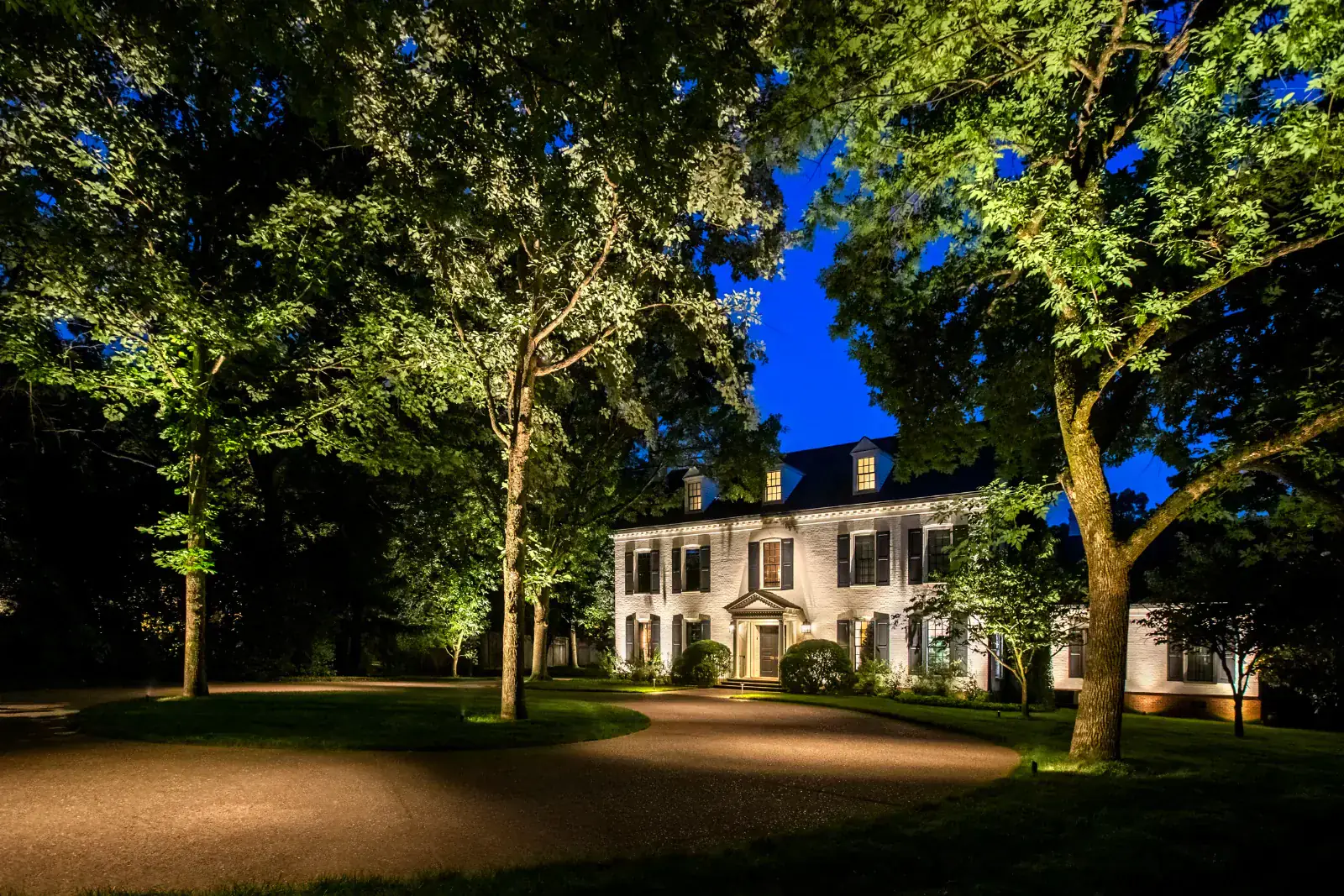
A phased driveway lighting project should offer a useful result at each stage, not leave a scattered collection of unfinished accents. For your Powhatan property, start by defining the arrival problem you want to solve first, then distinguish that complete initial scope from any later expansion.
Driveway and entrance lighting helps the approach, parking and walk to the door work together after dark. NightOak can prioritize a complete, useful first phase while considering how later lighting will connect.
We agree on the first arrival area, then plan fixtures, cable routes and equipment around that scope and any likely later work. Copper-crimp connections are protected in direct-burial gel-filled tubes. We test the controls and review the installed light after dark so the first phase works on its own, without depending on fixtures that have not been installed.
Select a connected task, such as understanding the parking area and reaching the door, rather than buying isolated fixtures across the property. The first stage should make sense when later stages are off or absent. Discuss its limits clearly before deciding that it is complete.
Consider what currently makes arrival difficult. An attractive entrance marker may be worthwhile, but it will not resolve poor visibility where people leave the car. Prioritize the actual use problem, then weigh decorative improvements against it rather than automatically starting at the front boundary.
Identify likely additions, hardscape work and places that could become difficult to access. Those considerations may influence equipment and cable planning. A future idea does not need a final fixture selection, but its uncertainty should be explicit so initial provisions are not mistaken for a guaranteed expansion plan.
No. It can spread the scope over time, but repeated site work or changes to earlier decisions may add cost. Ask the proposal to separate current work from future provisions. That makes it easier to judge whether a smaller initial installation serves your priorities.
Record the installed equipment, light color and design intent. Future selections should be reviewed against what is actually in place, since products and planting can change. Consistency comes from reassessing the whole view, not assuming that an identical product will remain available indefinitely.
Use a concrete need: a completed walk, changed parking arrangement or a remaining arrival problem. Review the first phase after dark before extending it. If the initial work is malfunctioning, resolve that issue through repair rather than treating a new installation as the next logical step.
Already have lights that are not working? Start with outdoor lighting repair.
The route from the car to the door deserves its own lighting plan. A softly lit walk and nearby planting can guide the final part of an arrival while driveway lighting handles vehicle sightlines.
Choose a question to prepare a note for your design conversation.
Select a connected task, such as understanding the parking area and reaching the door, rather than buying isolated fixtures across the property. The first stage should make sense when later stages are off or absent. Discuss its limits clearly before deciding that it is complete.
A conversation starter, not a site assessment, lighting simulation or estimate. Nothing is sent automatically.