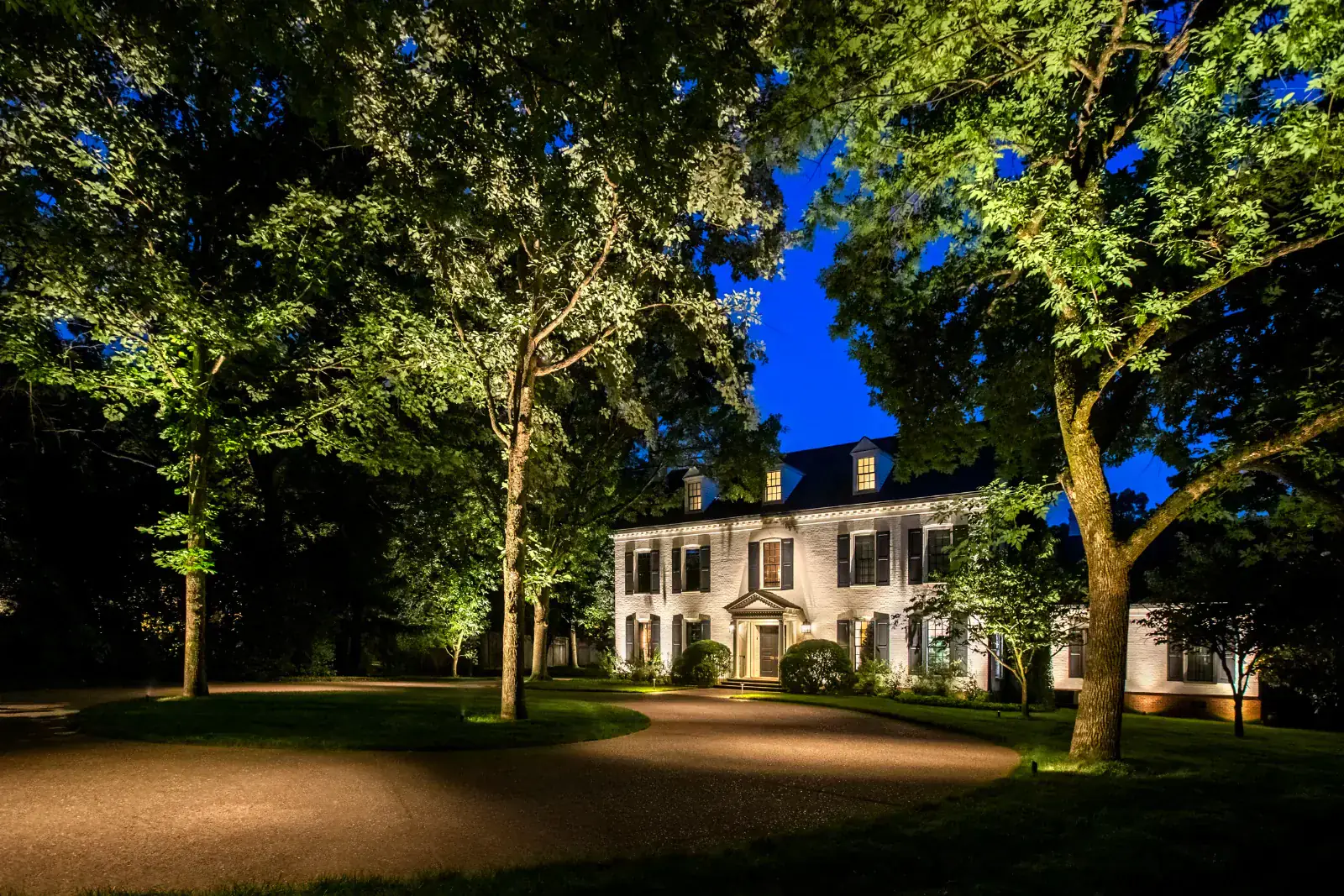
Moonlighting is most useful when the light falls where you want it and the source stays comfortable to look past. For your Short Pump outdoor space, we begin with nearby chairs, doors and windows before deciding whether an overhead position is a good fit.
Moonlighting uses downward light to bring the ground and garden beneath an elevated fixture into view. NightOak designs the effect for comfortable everyday sightlines, not just the view from a standing position.
We review the patio seats and nearby upper windows, then assess a suitable mount, cable route and future access. Shielding, supply capacity and controls are planned before installation. Final nighttime aiming checks the ground pattern, exposed-source views and reflected light from walls or fences, rather than relying on dimming alone to solve glare.
Look at the proposed source from each main seat, including when someone leans back or turns toward the garden. A light concealed from the doorway may be visible from a lower position. Mounting, shielding and aiming should respond to those real viewing angles.
Yes. An upper window may look directly toward a tree-mounted lamp or above its shielding. We consider those views before placing the fixture. Summer foliage should not be relied on as permanent screening because leaf fall and pruning can change what is exposed.
They can catch the beam or reflect light into the seating area. Pale surfaces may make a small amount of light appear stronger. We assess the whole setting rather than choosing a fixture only for the patch of ground immediately beneath it.
The design should account for where the light lands and how the source appears from nearby homes, as well as from your own property. Keep equipment within the authorized area and avoid treating another property as available mounting space. A different method may be preferable if spill cannot be controlled well.
It can reduce brightness where supported, but does not remove a poor viewing angle. Shielding and location remain the first considerations. Lowering output too far may also leave the intended area inadequately illuminated, so the design must balance the source and its useful effect.
Compatible schedules or zones may let selected decorative areas switch off while a useful route remains lit. Discuss those priorities during planning. The system’s fixtures, transformer and controls determine what is practical; not every existing installation supports the same functions.
If overhead locations expose the source, create unwanted spill or cannot reach the intended area comfortably, another technique may be better. A shielded path light, discreet wall accent or carefully positioned garden light may address the same need with fewer compromises.
Already have lights that are not working? Start with outdoor lighting repair.
Tree and facade accents give the home a clear setting after dark. When overhead lighting is added, review those existing layers together so the patio or garden receives gentle light without competing with every nearby feature.
Choose a question to prepare a note for your design conversation.
Look at the proposed source from each main seat, including when someone leans back or turns toward the garden. A light concealed from the doorway may be visible from a lower position. Mounting, shielding and aiming should respond to those real viewing angles.
A conversation starter, not a site assessment, lighting simulation or estimate. Nothing is sent automatically.