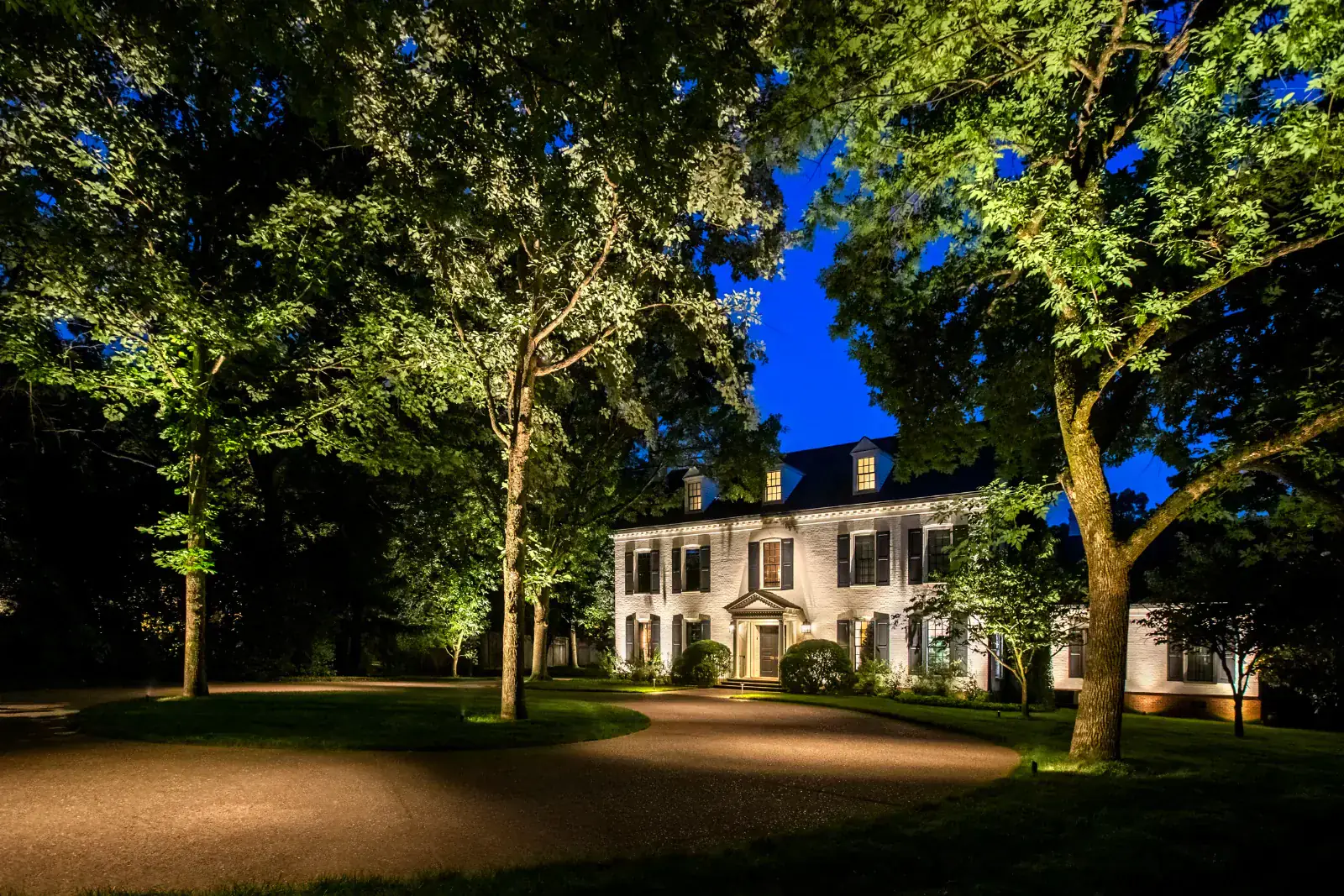
Soft light through a mature canopy can bring a lawn, pathway or outdoor living area into the evening landscape. NightOak considers moonlighting where the trees, mounting conditions and views make it a good fit.
Moonlighting is a form of downlighting that places a light source above the scene, often within a suitable tree canopy. Light passing through branches can create patterns of light and shadow below. Downlighting from a structure uses a similar downward direction, though it may create a different effect without a leafy canopy.
Choose the space you have in mind. Explore what would need to be considered before recommending light from above.
Suitable trees may allow light to reach a path from above. Canopy coverage, changes in level and the direction of the beam determine whether downlighting is enough or should be combined with other pathway lighting.
This is a concept explorer, not a tree assessment or lighting simulation. Suitability, mounting and service access require an on-site review. Nothing is submitted automatically.
Tree-based moonlighting depends on suitable tree structure, mounting locations and a useful path for the light to reach the scene. A young or sparse tree may not create the same effect as a broad canopy. Where trees are unsuitable, a structure-mounted downlight or a different lighting approach may be more appropriate.
Uplighting directs light upward to emphasize a trunk, branching form or other feature. Moonlighting directs light downward and focuses on the scene beneath it. They serve different purposes and can sometimes be balanced together within a broader landscape design.
No. Leaves, branch movement and seasonal growth influence the shadows and how much light reaches the ground. The design should account for that variation. A review after leaf growth, pruning or other changes can help determine whether adjustments are needed.
Mounting position, shielding, aiming and output all affect the result. We consider how the source appears from the ground, from seating and from windows. The goal is a comfortable view of the illuminated scene rather than an exposed lamp that draws the eye.
No single color temperature is right for every property. The choice should suit the intended effect, surrounding lighting and the people using the space. NightOak typically favors warm light in residential landscapes; the design discussion should determine what works here rather than assume that moonlighting must be blue.
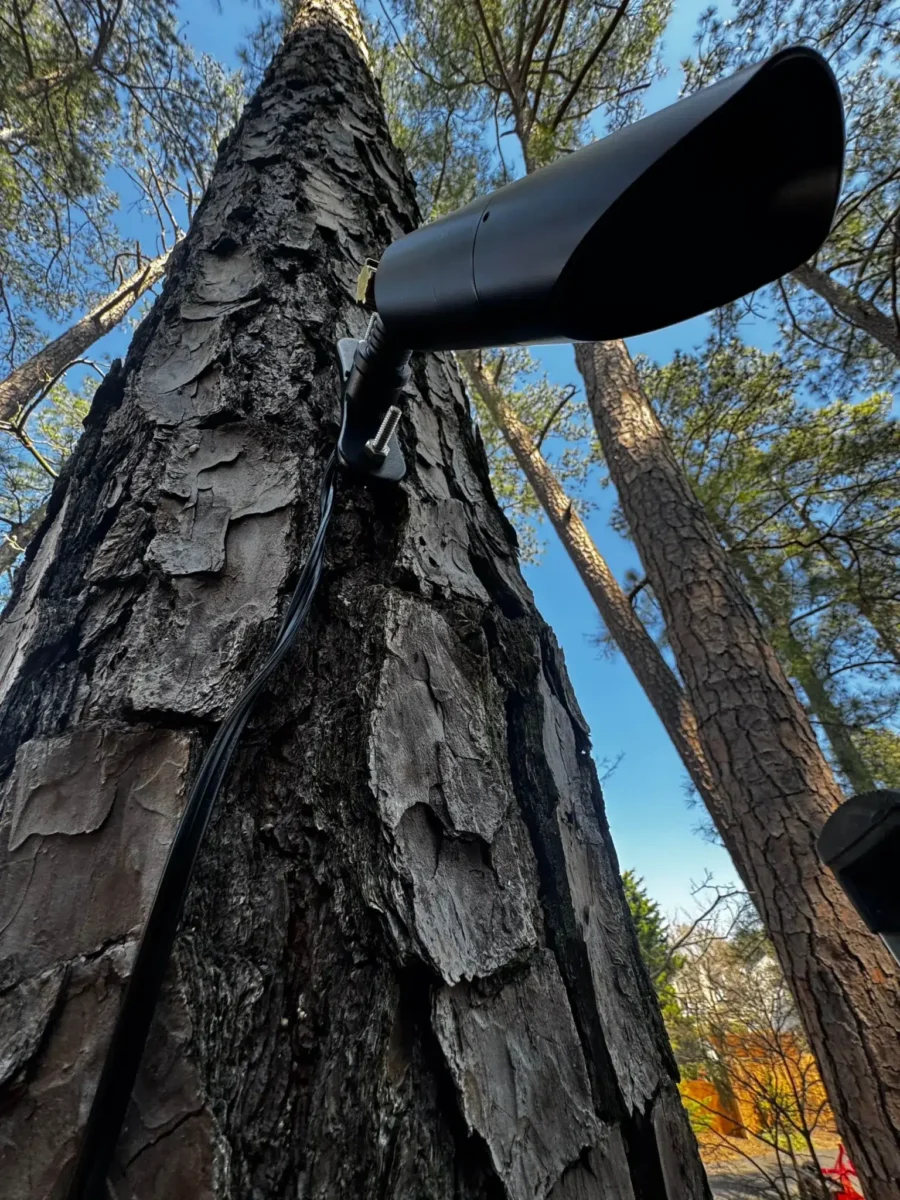
The review includes the mounting location, cable route, tree or structure conditions and practical access for installation and maintenance. Tree growth and changing foliage can affect the equipment and the light. The mounting method and ongoing care should be selected for the specific site and equipment, not a one-size-fits-all rule.
Access, mounting conditions, cable routes, the number of areas and compatibility with existing equipment influence the project. Elevated fixtures may require different installation and service access than ground-level lights. An on-site assessment establishes what is suitable before an estimate is prepared.
Already have lights that are not working? Start with lighting repair.
We review the property, the views you enjoy and how you use the space after dark.
Fixture placement, wiring, controls and the setting are considered together in the design and installation.
Nighttime fine-tuning helps balance aiming and brightness. Service and maintenance options support ongoing care.
Explore planning questions for your community. This page covers our Richmond-area approach.
Explore all service areas →