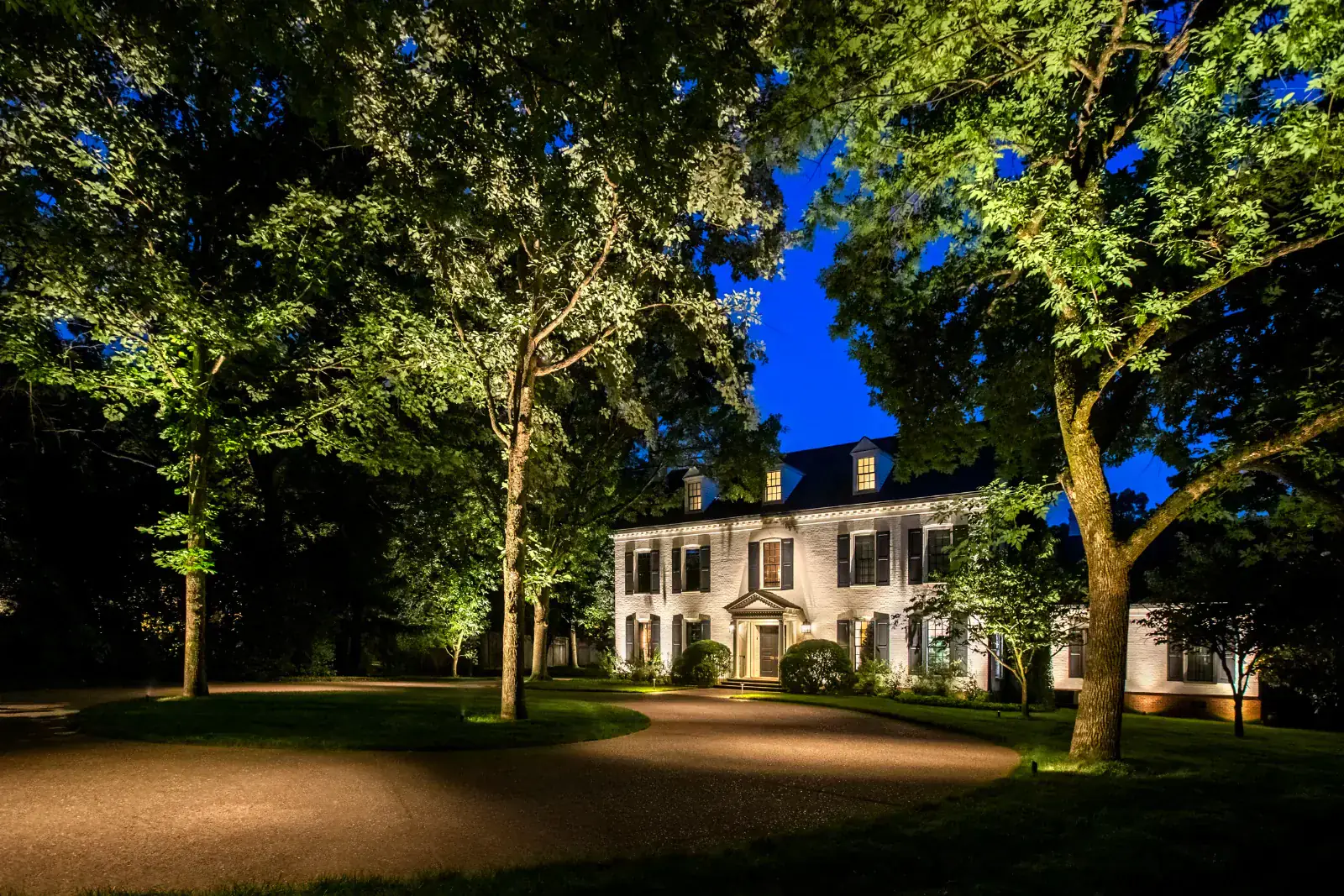
For your Wyndham home, moonlighting can be considered as one layer of the evening landscape rather than a stand-alone spotlight. We begin with the outdoor room you want to enjoy, the lighting already nearby and the limits of the area you control.
Moonlighting adds a soft downward layer to the spaces you enjoy outside. NightOak coordinates it with existing patio and architectural lighting so the extra layer serves a distinct purpose.
We confirm authorized mounting locations and access, then review the tree or structure, cable route and existing electrical equipment. Suitable fixtures and controls are installed for the agreed area. After dark, we aim and balance the overhead layer with the current lighting, checking seated views and spill toward shared spaces from accessible positions on your property.
Identify what the current lights already do well. An overhead layer might soften the garden beyond the patio or define a separate sitting area, rather than brighten the same surface again. The new effect should have a purpose that makes the overall view more comfortable and complete.
The color and relative brightness should be considered together, but different surfaces may need different treatment. A bright facade can dominate a softer garden effect. We assess the scene from the places you use instead of assuming every fixture should have identical output or color settings.
Confirm that the tree and the proposed equipment locations are within the area where work is authorized. A tree visible from your patio is not automatically yours to use. Any applicable approval or ownership question should be resolved before a mounting or cable route is committed to.
Select a mounting location and beam that serve the intended surface, then assess the source and spill from relevant viewpoints. Shielding and aiming matter as much as output. If the practical locations cannot limit unwanted light well, a different technique may make more sense.
Compatible controls may support dimming, schedules or separate zones. Start by describing the actual activities: dinner near the house, a quiet seat farther out or a route through the garden. We then review what the proposed or existing equipment can reliably provide.
A different chair position can reveal a source that was previously hidden or place someone outside the intended pool of light. If layouts change often, mention that during planning. Review the aiming and comfort after a substantial rearrangement rather than assuming the original view still applies.
Trees, planting and equipment positions can change the effect. Care may include cleaning, aiming checks and review of mounting and cable arrangements as the tree grows. Practical access should be considered from the start, especially where reaching the fixture requires more work than servicing a ground-level light.
Already have lights that are not working? Start with outdoor lighting repair.
Tree and facade accents give the home a clear setting after dark. When overhead lighting is added, review those existing layers together so the patio or garden receives gentle light without competing with every nearby feature.
Choose a question to prepare a note for your design conversation.
Identify what the current lights already do well. An overhead layer might soften the garden beyond the patio or define a separate sitting area, rather than brighten the same surface again. The new effect should have a purpose that makes the overall view more comfortable and complete.
A conversation starter, not a site assessment, lighting simulation or estimate. Nothing is sent automatically.