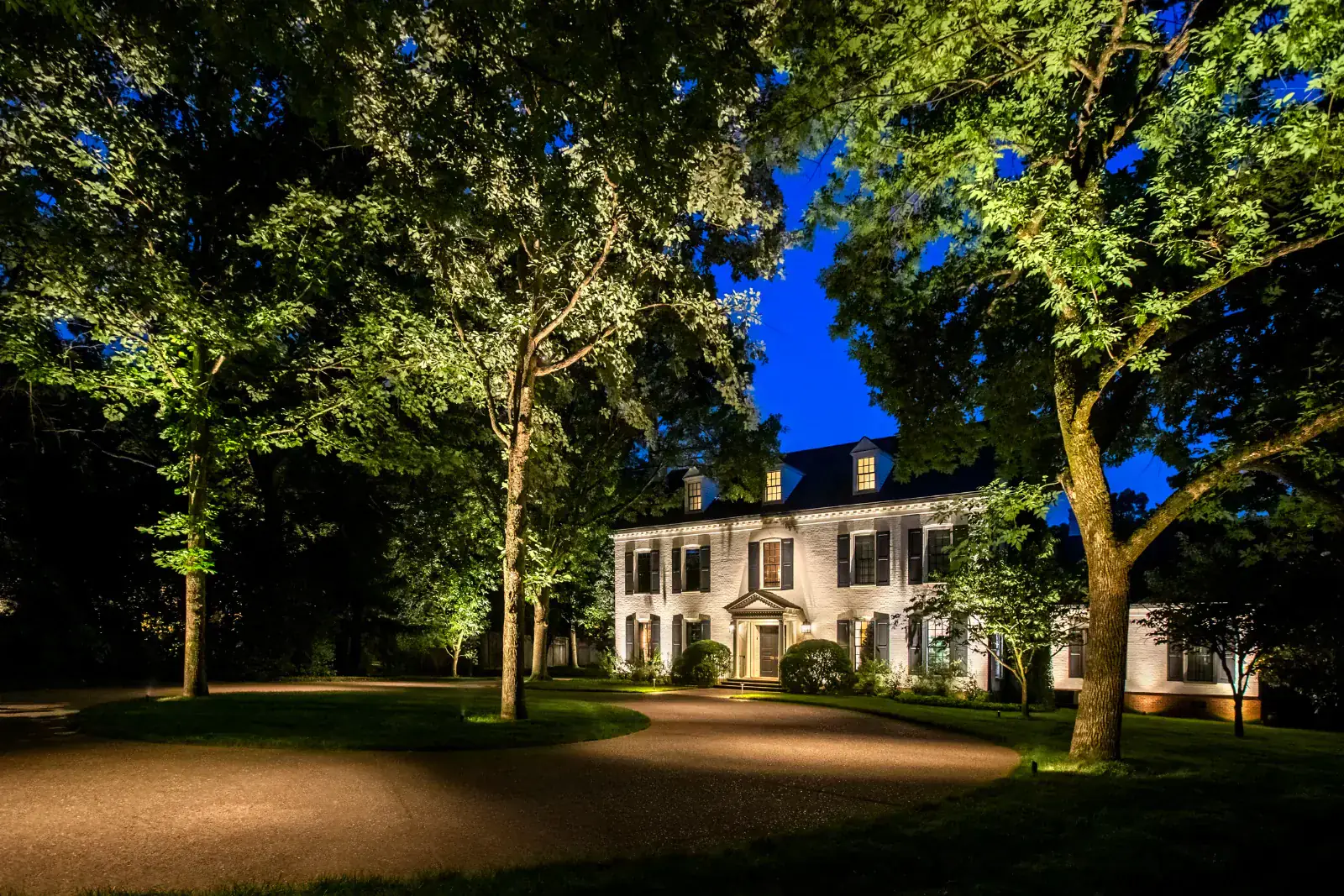
If your Glen Allen property already has lights in the trees, begin by separating what still works from what no longer suits the landscape. A moonlighting update may involve aiming, access or equipment changes rather than simply installing more fixtures.
Moonlighting directs light downward to create a soft ground-level scene. NightOak can review an existing effect when plant growth, equipment condition or changed outdoor use has made it less useful.
We inspect the existing fixture, mount, cable, connections and electrical supply before deciding what to retain. Any new position must suit the tree or structure and remain accessible for care. After installation or adjustment, we check operation and review the nighttime pattern alongside the retained lights rather than treating a new fixture as the cure for every problem.
Growth, pruning, shifted equipment or a dirty lens may change where light lands. An electrical fault can also reduce or interrupt output. We first establish whether the issue is appearance, performance or both, so an expansion is not used to hide a system problem.
That depends on their condition, compatibility and the effect you want. Mixing equipment can create noticeable differences in color or brightness. A review can identify what is worth retaining and whether a focused replacement or a broader redesign would give a more coherent result.
Available transformer capacity is only part of the check. Cable condition, the proposed load, voltage at the fixtures and compatible controls also matter. An unused terminal or an apparently bright existing lamp does not establish that the run can support the addition.
It needs a fresh assessment. The tree may have grown, the cable route may need attention, or access may have changed. We consider the current mounting arrangement and service needs rather than assume a position is suitable simply because a fixture has been there for years.
Identify the view that matters now and describe what you want to improve. A new patio, moved furniture or a taller planting bed may have changed the priorities. The proposed light should serve those current uses, not recreate a layout that no longer matches the property.
Compatible controls may add scheduling, zones or dimming, but the existing equipment must support the intended functions. First decide which areas need to operate together. A control upgrade cannot correct poor aiming, blocked light or a mounting position that exposes the source.
Start with repair if fixtures flicker, fail to turn on or behave unpredictably. A design consultation is useful when the lights work but the scene or coverage needs to change. If both apply, explain the symptoms and your goals so the assessment can establish a sensible sequence.
Already have lights that are not working? Start with outdoor lighting repair.
Choose a question to prepare a note for your design conversation.
Growth, pruning, shifted equipment or a dirty lens may change where light lands. An electrical fault can also reduce or interrupt output. We first establish whether the issue is appearance, performance or both, so an expansion is not used to hide a system problem.
A conversation starter, not a site assessment, lighting simulation or estimate. Nothing is sent automatically.