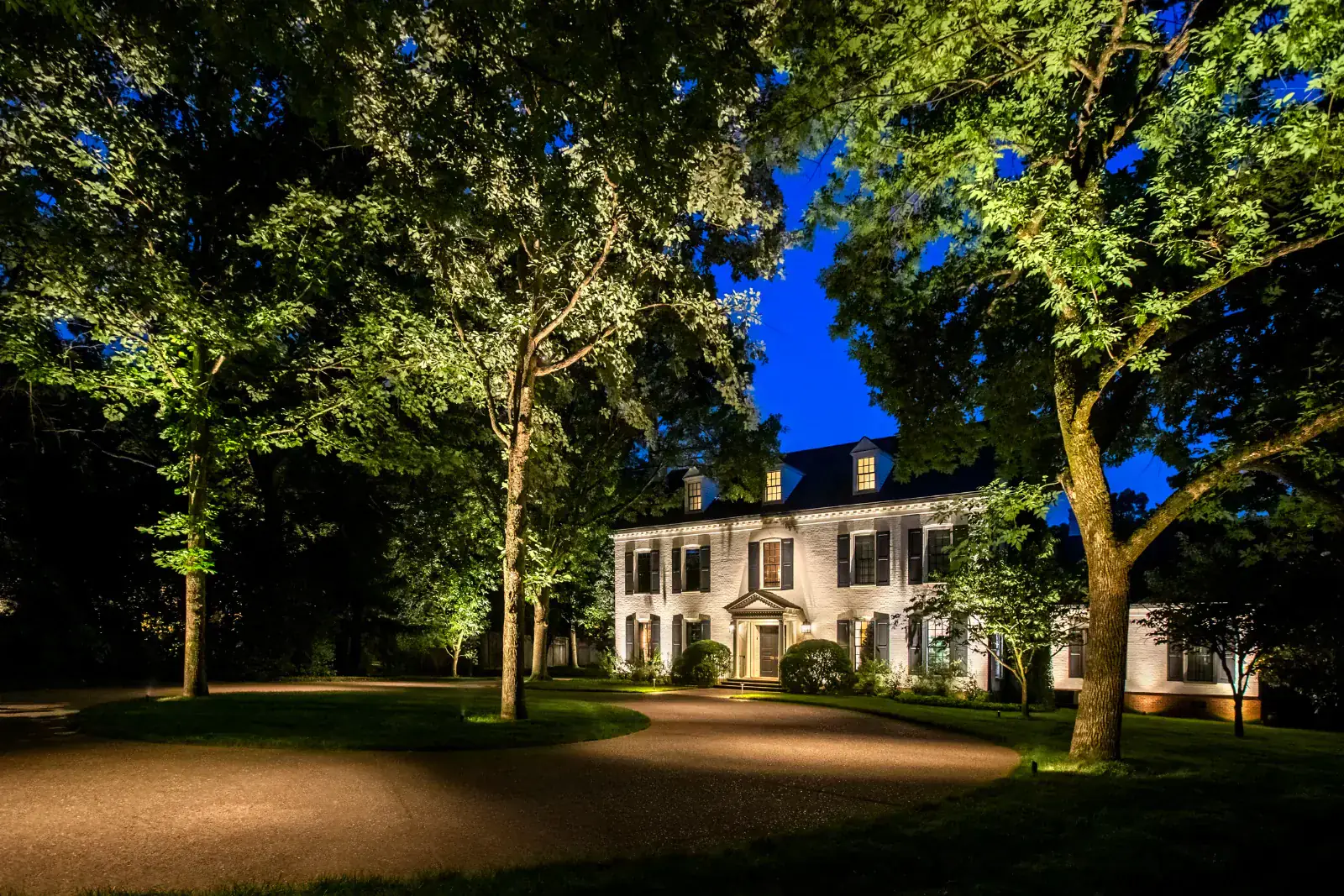
On a Goochland property with trees near the approach, overhead lighting may help connect the entrance, parking area and landscape. The useful question is where light can reach the ground comfortably, with a practical plan for installation and future care.
Moonlighting can bring downward-directed light to a selected part of an approach or parking area. NightOak evaluates the actual route beneath the trees rather than assuming every nearby tree is a suitable lighting position.
We review vehicle and walking sightlines, then assess a suitable elevated mounting position and the beam’s path to the surface. We plan equipment access, cable runs and low-voltage capacity before installing the fixtures. Final nighttime aiming checks arriving, departing and turning views as well as coverage at the transition to the walk.
Possibly, but its position relative to the driving surface matters more than proximity alone. Branches may block the intended beam or the usable mounting point may fall on the wrong side. We assess actual coverage rather than assume a row of trees creates a ready-made lighting layout.
Consider approaching, departing and turning positions, including the view through the windscreen. A lamp hidden from a person standing on the drive can still be visible from a lower seat. Shielding and aiming should account for those changing angles, not just the view from the house.
They may need different effects. The entrance helps establish the first turn, while parking connects to people walking toward a door. An overhead accent can support either area, but fixture placement and output should follow the specific transition rather than repeat the same pool of light everywhere.
Do not force distant fixtures to reach every part of the gap. The result may be glare or uneven light. A combination of selected overhead locations and another technique can be more practical. We decide where useful illumination is needed before choosing how to provide it.
Elevated fixtures can reduce the need for some ground-mounted equipment, but they introduce their own access and mounting considerations. Cable routes, tree growth and servicing remain part of the plan. They are not automatically the simpler choice merely because the fixture is above ground.
The electrical plan should account for load, cable distance, conductor size, equipment and the desired control groups. Several distant areas may need a different arrangement from one small pool of light. We assess the site before recommending equipment or promising to reuse an existing run.
It should reflect the access needed for the selected mounting positions and the scope of the installation. Routine care may include lens cleaning, aiming checks and review of the mounting and cable arrangement as trees change. Discuss those needs before committing to a difficult elevated location.
Already have lights that are not working? Start with outdoor lighting repair.
Choose a question to prepare a note for your design conversation.
Possibly, but its position relative to the driving surface matters more than proximity alone. Branches may block the intended beam or the usable mounting point may fall on the wrong side. We assess actual coverage rather than assume a row of trees creates a ready-made lighting layout.
A conversation starter, not a site assessment, lighting simulation or estimate. Nothing is sent automatically.