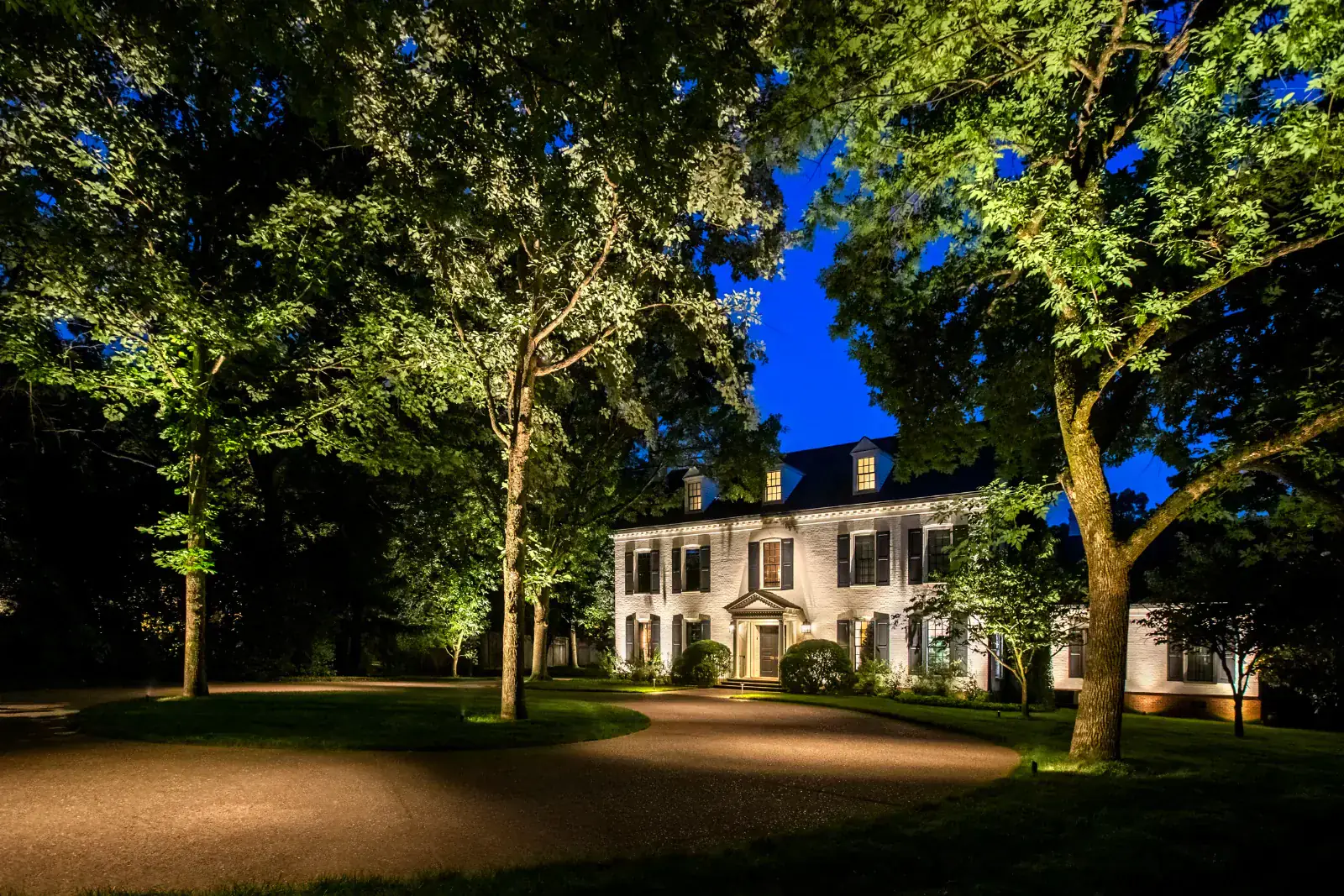
If the trees at your Moseley home are still growing, overhead lighting should be planned around what the property can support today. A suitable structure may offer an option, or another lighting method may provide the outdoor experience you want while the landscape develops.
Moonlighting brings light down from a suitable elevated position. Where young trees cannot support that approach, NightOak can consider structure-mounted downlighting or a ground-level alternative for the current outdoor space.
We assess the actual tree or structure rather than design around future growth. Suitable mounting, cable access, shielding, low-voltage supply and controls are resolved before installation. We then aim and review the fixtures after dark from the seating and garden routes, coordinating with construction work where a new outdoor structure is involved.
A small tree should not be assumed suitable simply because it sits in the desired location. The mounting arrangement, tree condition, branch structure, cable route and future growth all need assessment. Another technique may be more appropriate than treating an immature tree as a permanent support.
Both direct light downward, but the appearance differs. Light from a structure will not create a leafy pattern unless planting lies in its path. The design can still be soft and useful, provided the construction, mounting position and shielding are appropriate for the setting.
Bring the intended seating, lighting goals and construction plans into the conversation early. Access for wiring and suitable mounting details may be easier to coordinate before work is complete. The lighting design should be matched to the actual structure rather than promise a fixture location that cannot be supported.
A lower source can work in some settings, but it may be more visible and produce a smaller pool of light. Shielding and seated sightlines become especially important. The aim is a comfortable result, not forcing a dramatic overhead effect from an unsuitable height.
It can be useful to discuss future cable routes, system capacity and intended lighting zones. That does not mean installing a tree-mounted fixture before the tree is suitable. The proposal should distinguish practical provisions made now from possible future work that still depends on changing conditions.
Options may include discreet hardscape lighting, suitable structure-mounted downlights or selected garden accents around the seating. Each serves a different part of the scene. We consider the actual furniture and routes rather than using one bright source to cover the entire outdoor area.
Review the view after planting has grown or outdoor construction is completed. New foliage can screen a source, obstruct useful light or create a different focal point. Adjustments should respond to those real changes, with tree mounting reconsidered only if the conditions support it.
Already have lights that are not working? Start with outdoor lighting repair.
Choose a question to prepare a note for your design conversation.
A small tree should not be assumed suitable simply because it sits in the desired location. The mounting arrangement, tree condition, branch structure, cable route and future growth all need assessment. Another technique may be more appropriate than treating an immature tree as a permanent support.
A conversation starter, not a site assessment, lighting simulation or estimate. Nothing is sent automatically.