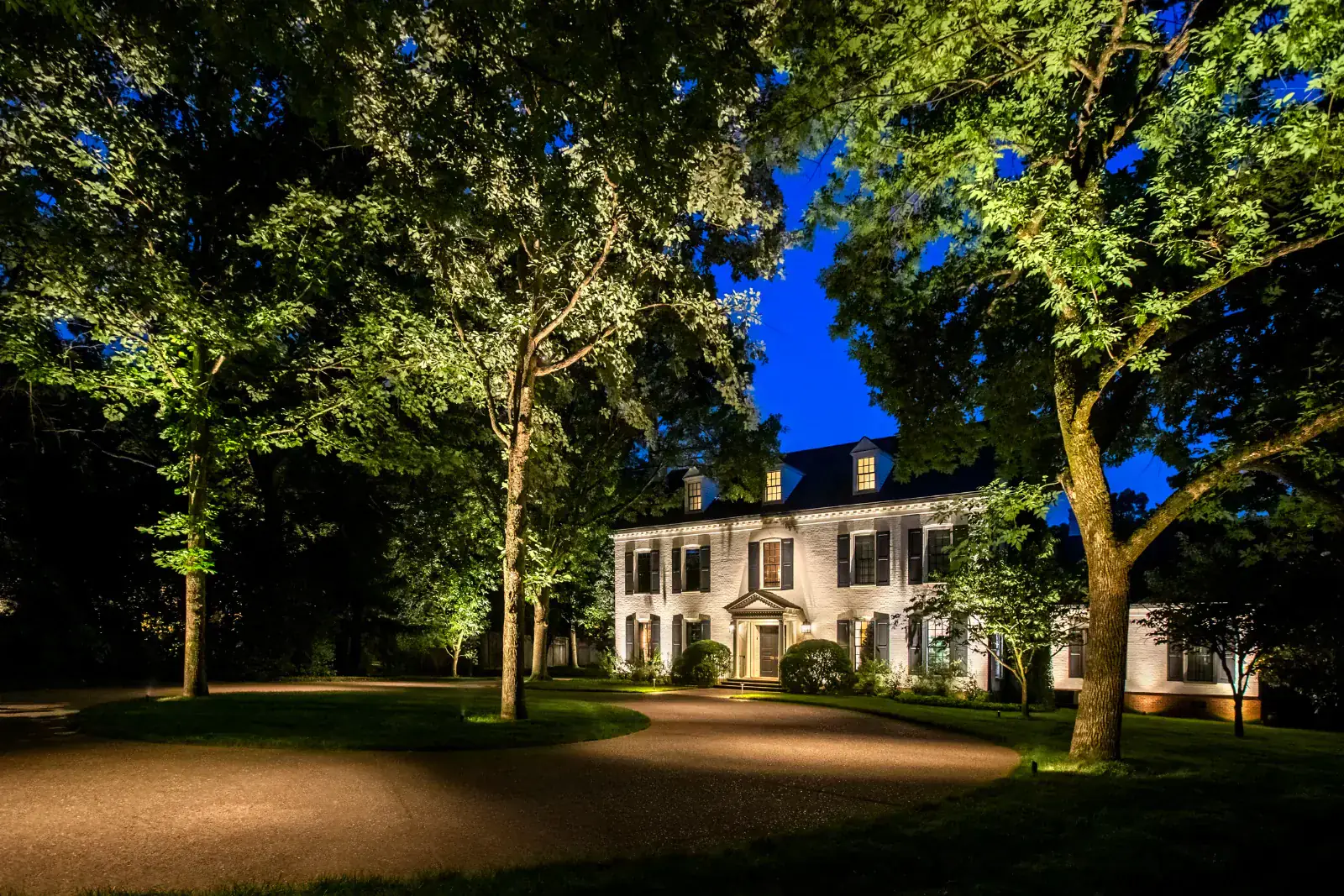
Moonlighting can be considered for the routes that connect outdoor spaces at your Mechanicsville home. A path from the patio to another garden area needs a clear purpose and suitable coverage, rather than a fixture placed in whichever tree is easiest to reach.
Moonlighting adds a downward layer to the garden or route below a suitable mounting position. NightOak separates the decorative shadow effect from the consistent visibility needed at steps and changes in level.
We walk the route both ways, identify the transitions and assess whether an overhead position can reach them without exposing the source. Mounting, cable access, supply capacity and controls are planned before installation. After dark, we check coverage and aiming; where moving branch shadows leave an important transition unclear, we consider a separate step or pathway solution.
Walk the route in both directions and identify the decisions people make. Leaving a door, following a bend and entering a separate sitting area can present different views. That walkthrough establishes the places worth considering before a mounting location or fixture is chosen.
Sometimes, but the bend may move beyond the useful beam or behind planting. Aiming one bright source across the entire area can expose it to someone approaching from the other direction. The plan should follow the route’s shape and may use more than one lighting method.
Steps and changes in level need their own attention. Moving branch shadows can make the appearance less consistent, so a decorative moonlighting effect should not be assumed to address them adequately. We assess what reaches each transition and consider suitable step or pathway lighting where needed.
A strong porch or wall light can dominate the view and make nearby landscape accents appear weaker. We consider the existing light and the experience of moving away from it. Adding more brightness down the route is not always the most comfortable response.
A suitable structure may allow downlighting where trees cannot. The effect may be more even and will not produce the same leafy pattern. Construction, cable access and the view of the source all need review before recommending attachment to an existing building or outdoor structure.
Compatible zoning and schedules may support that preference. Discuss which route you actually use late in the evening and how existing equipment is arranged. Controls need to suit the selected fixtures and system; they should not be promised before compatibility is checked.
Review coverage after pruning, substantial growth or changes to the route. A moved chair, new bed or replaced gate can also alter sightlines and access. The mounting and cable arrangement need periodic attention, while any flickering or failed lights call for a service assessment.
Already have lights that are not working? Start with outdoor lighting repair.
Choose a question to prepare a note for your design conversation.
Walk the route in both directions and identify the decisions people make. Leaving a door, following a bend and entering a separate sitting area can present different views. That walkthrough establishes the places worth considering before a mounting location or fixture is chosen.
A conversation starter, not a site assessment, lighting simulation or estimate. Nothing is sent automatically.