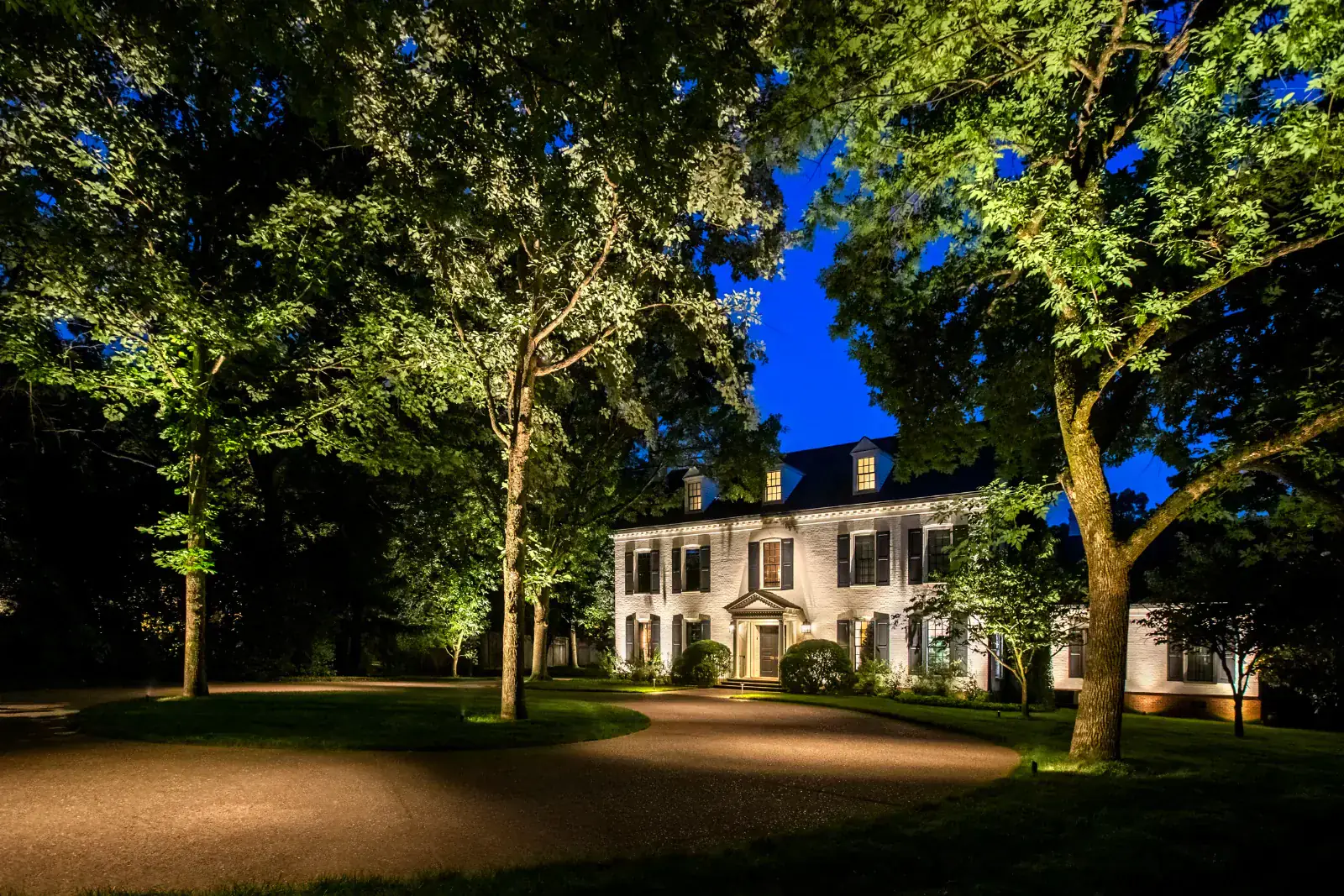
A tree can be both a feature to look at and a place to spend the evening beneath. For your Midlothian home, we consider moonlighting as part of that whole scene, balancing the view of the canopy with the spaces around it.
Moonlighting emphasizes the space beneath a tree with downward-directed light; uplighting emphasizes the tree itself. NightOak can coordinate both where each effect has a useful role.
We select the primary viewing positions and the ground area to illuminate, then assess the mount, tree condition, cable route and service access. We check compatibility with any existing system before installation. After dark, we aim and balance the downward light against the uplighting so neither becomes an isolated bright patch.
That distinction guides the design. Uplighting emphasizes the trunk and canopy; moonlighting directs attention toward the area below. Both may be appropriate, but identifying the main purpose keeps the plan from treating every surface with the same amount of light.
They can where the site supports both, provided each has a clear role. We compare color, brightness and direction from the main viewing positions. If two effects compete, adjusting their balance may be more useful than adding another fixture to make either one stronger.
Begin with the places where you spend time: a living-room window, the patio or the approach to the garden. A fixture concealed from one angle can remain visible from another. Discuss those priorities together so the design addresses the everyday views rather than only a photograph from the lawn.
The effect comes largely from light direction, placement and the pattern through the canopy. It does not require a blue lamp. Warm residential light can create this effect, with the final choice considered alongside the other lighting and materials on your property.
The pool of light should relate to its surroundings. Output, beam spread and the selected mounting point affect the transition into the darker garden. A small amount of nearby landscape light may help where appropriate, but the entire yard does not need equal brightness.
Review transformer capacity, wiring condition, voltage and control compatibility before deciding how the new lights will connect. The proposed tree-mounted cable route and maintenance access also need assessment. Existing uplights do not by themselves establish a suitable supply or mounting arrangement for downlighting.
Daylight is useful for reviewing access, mounting and the relationship between spaces, but not for judging the final effect. The balance between upward and downward light should be evaluated after dark, including the normal views from inside and from the seating area.
Already have lights that are not working? Start with outdoor lighting repair.
Choose a question to prepare a note for your design conversation.
That distinction guides the design. Uplighting emphasizes the trunk and canopy; moonlighting directs attention toward the area below. Both may be appropriate, but identifying the main purpose keeps the plan from treating every surface with the same amount of light.
A conversation starter, not a site assessment, lighting simulation or estimate. Nothing is sent automatically.