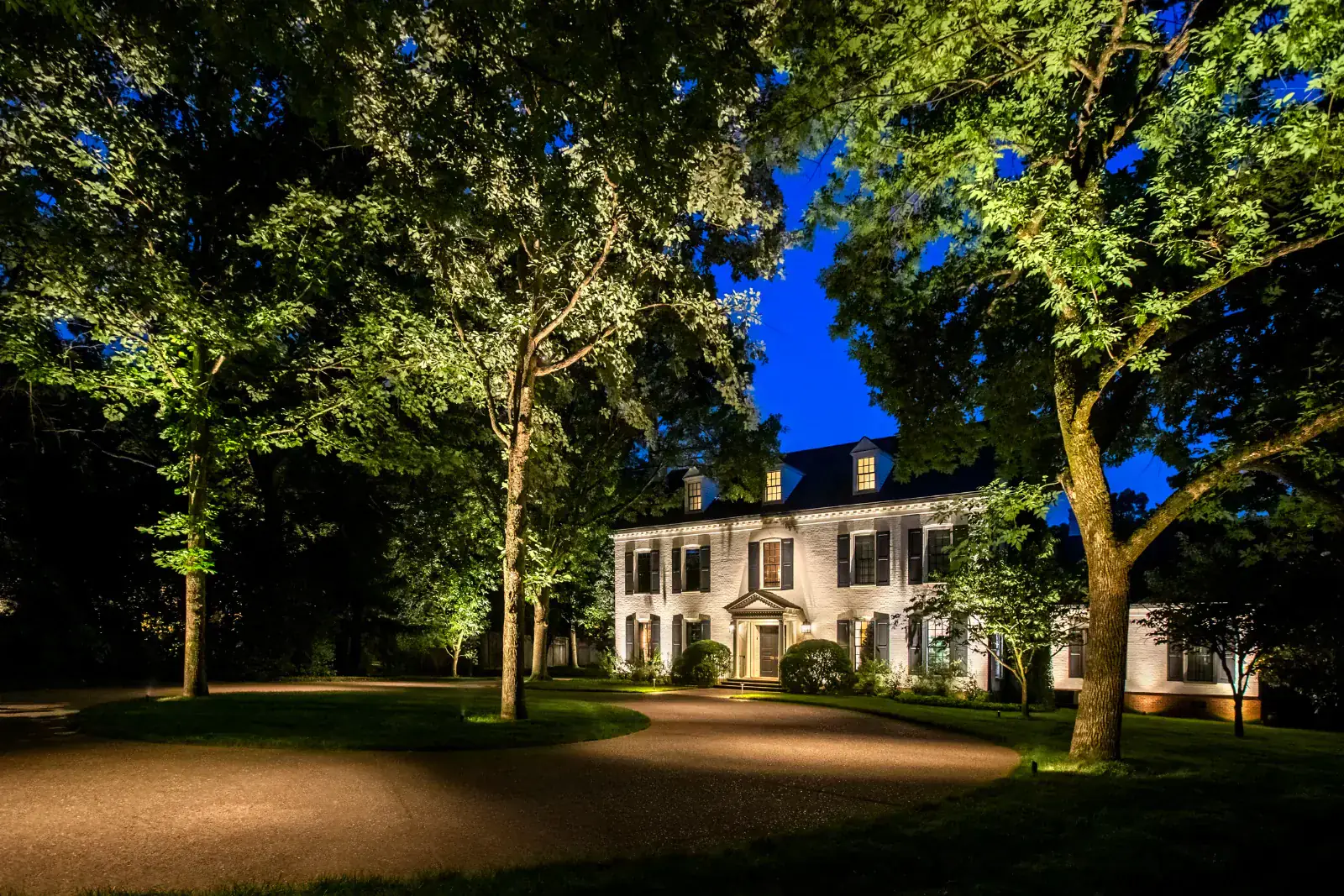
For a Bon Air garden with established trees, light from above may connect a sitting area to the landscape beyond it. Start with the view from the house and the places you use outside, then ask whether the available mounting positions can serve both comfortably.
Moonlighting is downward-directed light from a suitable elevated position, often filtered through branches to create soft patterns below. NightOak plans the effect around a useful garden view rather than lighting the entire yard.
We identify the ground area to illuminate, assess a suitable tree or structure and plan mounting, cable routing and future access. After checking the low-voltage supply and controls, we install and aim the fixtures. The nighttime review includes the seats and upstairs windows so a comfortable ground pattern does not come with an exposed overhead lamp.
Begin with a specific destination, such as a garden seat or a section of lawn beside the patio. A limited pool of light can be more useful than trying to illuminate the entire yard. The location of a suitable tree or structure determines whether that focused effect is practical.
Yes. Look from the rooms you use in the evening, with their normal interior lighting on. An overhead source that is hidden outdoors may be visible from an upstairs window. We consider those viewpoints along with the pattern on the ground before settling on a mounting location.
A pale wall, paving or a nearby fence can reflect light back into the scene. That can make a small backyard feel brighter than expected. The design should account for those surfaces instead of choosing output from the size of the lawn alone.
It should be a deliberate choice. Leaving selected planting or a background edge unlit can give the illuminated area depth. We consider the routes people use separately, so preserving shadow does not mean overlooking a step or an important transition.
Convenient position alone does not establish a suitable mounting point. Tree condition, branch structure, the light path and practical access all need review. The source also needs to remain comfortable when someone looks up from that seat; foliage is not reliable year-round shielding.
It can expose the source or change the distribution of light below. Mention planned tree work during the consultation, and review the effect afterward. If tree condition is uncertain, a qualified tree-care professional may need to assess it before a mounting approach is selected.
A discreet garden accent or shielded pathway fixture may serve the intended view better. The goal is the comfortable outdoor space, not a particular technique. We can discuss those alternatives alongside any useful existing lights rather than force a tree-mounted installation.
Already have lights that are not working? Start with outdoor lighting repair.
Choose a question to prepare a note for your design conversation.
Begin with a specific destination, such as a garden seat or a section of lawn beside the patio. A limited pool of light can be more useful than trying to illuminate the entire yard. The location of a suitable tree or structure determines whether that focused effect is practical.
A conversation starter, not a site assessment, lighting simulation or estimate. Nothing is sent automatically.