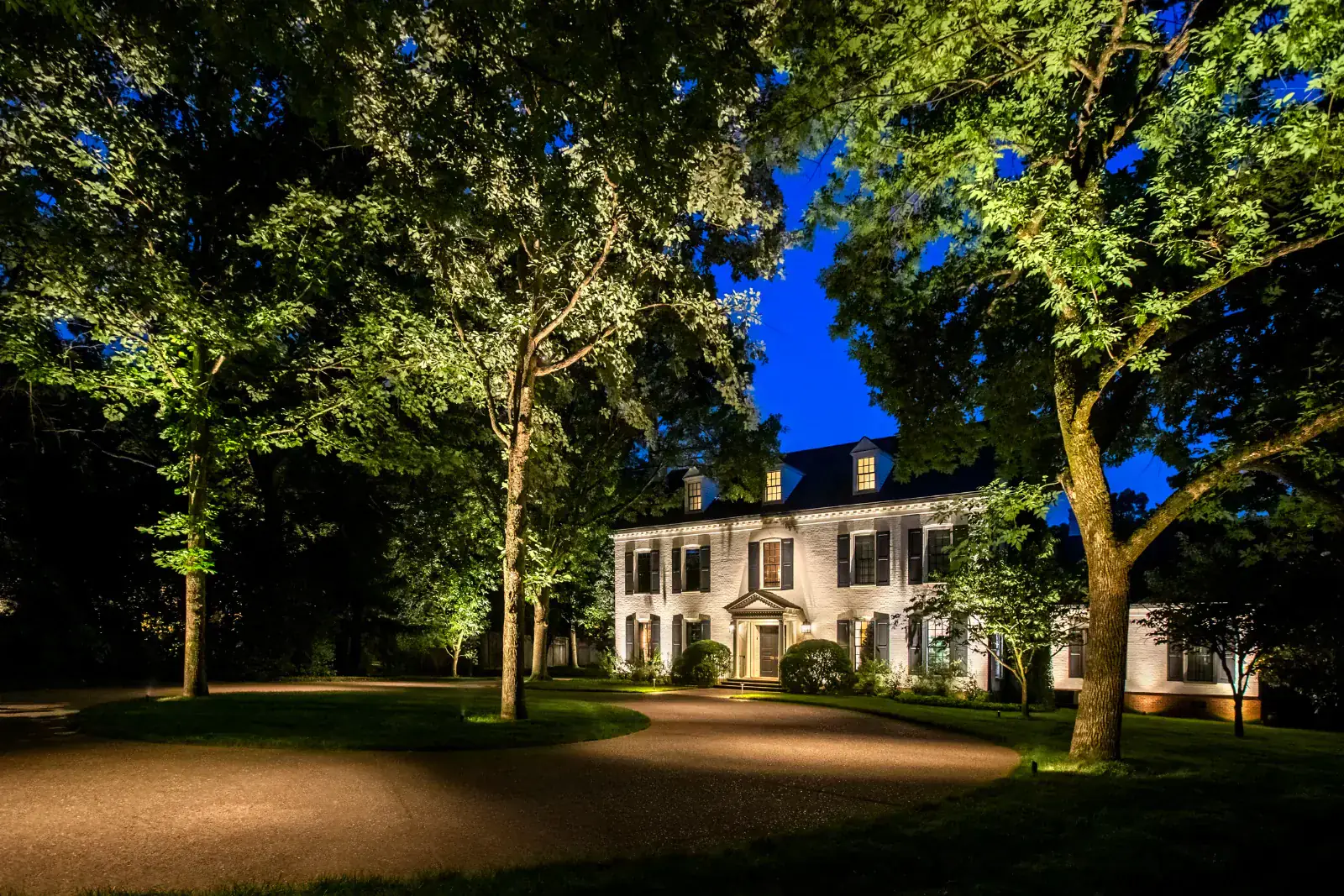
If your Bon Air driveway ends close to an established garden and front walk, more fixtures can make a small arrival area feel crowded. Start by identifying the space vehicles and people actually use, then place light where it helps without filling every available planting pocket.
Driveway and entrance lighting helps make the arrival, parking area and route to the door easier to read after dark. NightOak plans low-voltage light around those different tasks, not just a row of matching fixtures.
We mark the usable parking space and walking route before selecting fixture locations. We plan protected cable routes, check the transformer and controls, and make copper-crimp connections inside direct-burial gel-filled tubes. After installation, we check and aim the lights with the usual parking arrangement in place so open doors and passengers are part of the review.
Account for open car doors, passengers stepping out and the space needed to carry bags. A fixture outside the tire path can still obstruct those movements. Mark the occupied parking area before choosing a position, rather than treating the pavement edge as the only boundary.
The walk needs to be easy to recognize, but a bright strip beside a dark parking space can create an abrupt transition. Review the two together from the parked car. Emphasize the walking direction and any changes in level without making every surface equally bright.
They may screen the fixture from some views while also blocking its useful light. Consider the shrub after normal pruning and at its expected size. Keep the light accessible rather than placing it deep inside planting that must be disturbed whenever service is needed.
Evaluate it with the driveway lighting on. A prominent porch lamp may dominate the small space or create glare toward arriving drivers. The driveway design should account for that existing source, including where its light reaches and which areas remain difficult to read.
Map that walking route separately from the parked vehicle. A car can block light that seemed adequate on an empty driveway. Check the gate latch and the turn beside the house with the usual vehicle in place before deciding the route is covered.
Not necessarily. First separate poor placement from failed equipment. Working fixtures might be adjusted or incorporated if their condition and electrical compatibility support the plan. Dark or intermittent lights need assessment before a design assumes that adding another fixture is the answer.
Already have lights that are not working? Start with outdoor lighting repair.
Choose a question to prepare a note for your design conversation.
Account for open car doors, passengers stepping out and the space needed to carry bags. A fixture outside the tire path can still obstruct those movements. Mark the occupied parking area before choosing a position, rather than treating the pavement edge as the only boundary.
A conversation starter, not a site assessment, lighting simulation or estimate. Nothing is sent automatically.