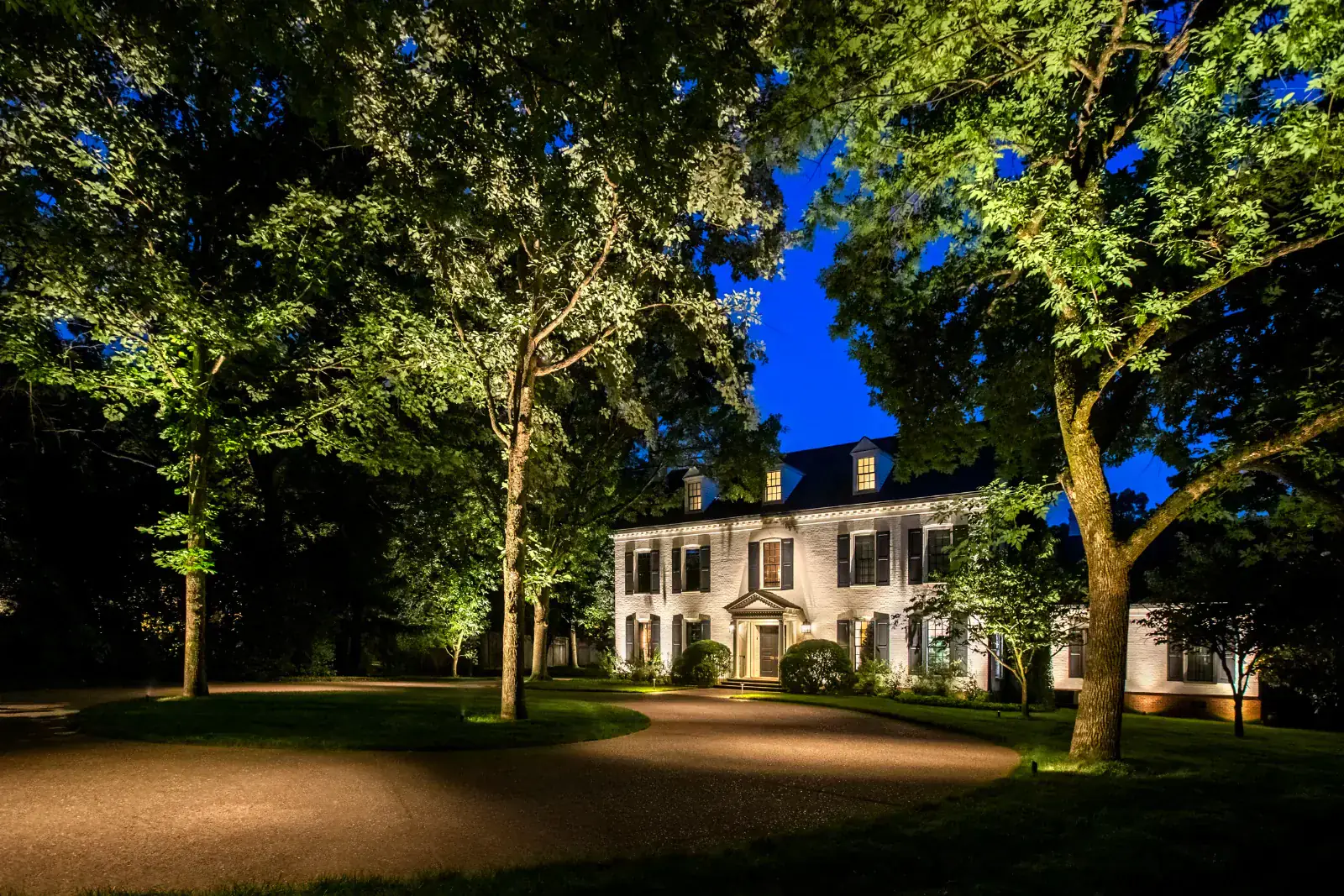
A driveway is often a working space as well as an entrance. If your Mechanicsville home has a side-entry garage or parking beside the house, plan around unloading, maneuvering and walking with vehicles present. An empty driveway can hide the shadows and awkward transitions that matter most.
Driveway and entrance lighting supports the everyday arrival: turning into parking, unloading and finding the door. NightOak plans those useful light levels alongside the appearance of the home.
We review typical vehicle positions and the turn into the garage before locating fixtures. We route cable clear of routine use, check the low-voltage supply and controls, and protect copper-crimp connections in direct-burial gel-filled tubes. Final aiming checks unloading areas and the walk to the door with vehicles present, not only an empty driveway.
Use the arrangement that occurs most evenings, then consider occasional extra vehicles. Note where passengers step out and which car blocks another route. A design based only on a cleared driveway can place useful light directly behind the vehicle that is usually parked there.
The garage face may be turned away from the approach, leaving the turn into parking harder to read. Review the transition from approach to garage rather than relying on front-of-house lighting. The relevant view changes as the vehicle turns, so assess more than one position.
Identify the place where bags, equipment or groceries are normally handled. Restrained light on that area may be more useful than increasing output everywhere. Check whether an open liftgate or vehicle door blocks the proposed coverage before deciding where the light belongs.
Assess visible fixtures and reflected glare from the actual reversing direction. The vehicle and its own lights affect that view, but landscape lighting should not add a distracting source where the driver looks. Lighting is an aid to visibility, not a substitute for careful maneuvering.
Make the connection from their likely parking position to the correct walk understandable. A brightly accented side wall can attract attention without indicating an entrance. Review the destination and intermediate route together, including any unlit turn that makes the intended direction ambiguous.
That depends on use and compatible controls. Discuss whether arrival lighting should follow a regular schedule and whether a separate task area needs different operation. Control choices should reflect actual equipment and routines rather than promise independent zones that the existing system cannot support.
Already have lights that are not working? Start with outdoor lighting repair.
Choose a question to prepare a note for your design conversation.
Use the arrangement that occurs most evenings, then consider occasional extra vehicles. Note where passengers step out and which car blocks another route. A design based only on a cleared driveway can place useful light directly behind the vehicle that is usually parked there.
A conversation starter, not a site assessment, lighting simulation or estimate. Nothing is sent automatically.