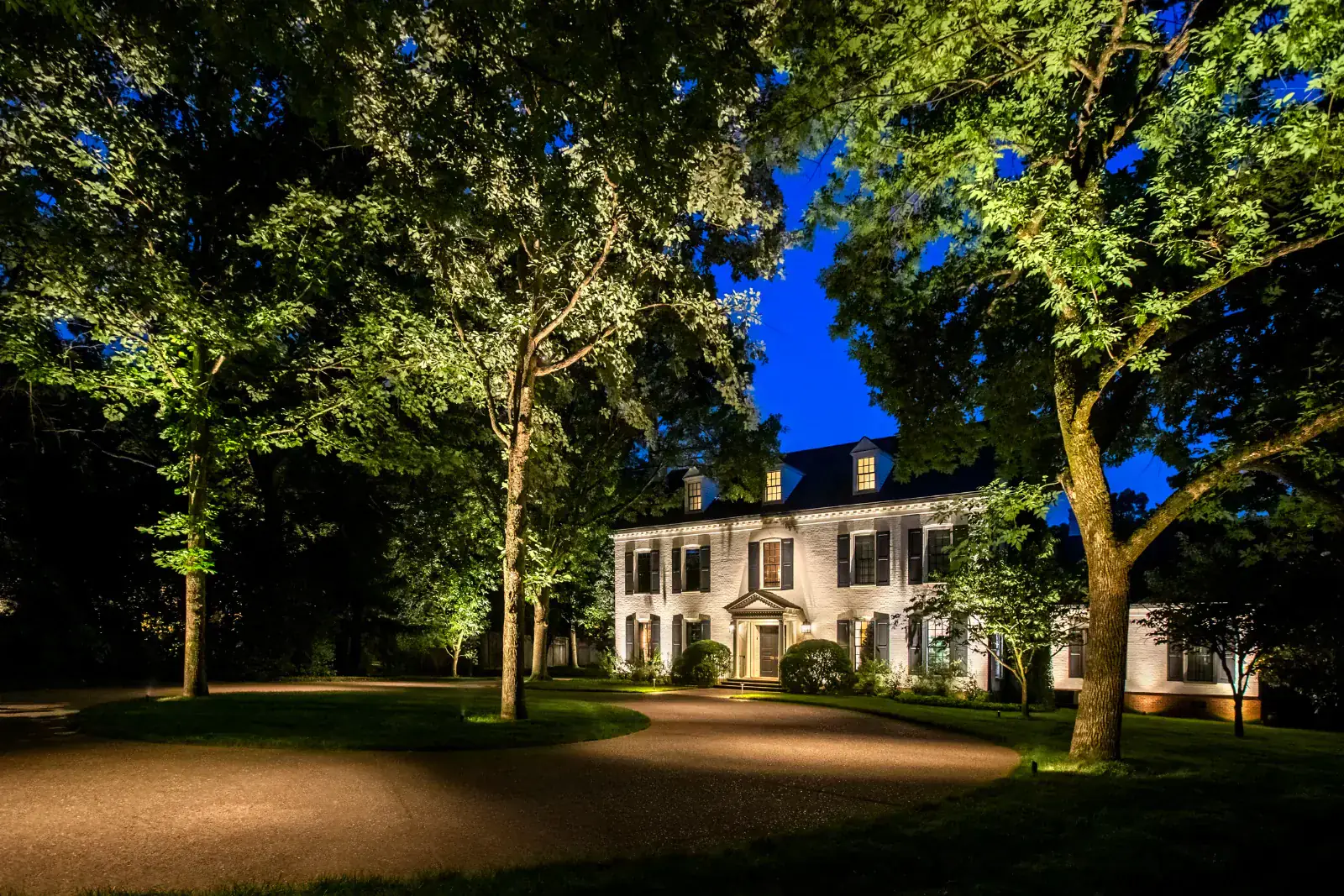
If the landscaping beside your Moseley driveway is still taking shape, a lighting plan should work with today’s conditions and tomorrow’s intended changes. Separate the entrance functions you need now from decorative choices that depend on a future bed, finished wall or mature plant.
Driveway and entrance lighting brings useful light to parking, approach and walking transitions. NightOak plans it around the finished layout and the changes still expected, rather than relying on young planting to hide exposed lights.
We confirm driveway edges, drainage, parking and access before laying out fixtures and cable. Where landscaping or paving is still planned, we coordinate the routes before they are covered. After checking the low-voltage supply and controls, we install protected copper-crimp connections in direct-burial gel-filled tubes and complete nighttime aiming for the site as it is now.
Confirm the driveway edge, likely parking arrangement and route to the front door. Then identify landscape elements that are genuinely decided and those still under discussion. A fixture layout based on an uncertain planting sketch can become inconvenient before the garden is even established.
Small plants may not provide meaningful screening, and they should not be expected to conceal an exposed lamp immediately. Choose suitable shielding and placement for the current site. Future growth can change the view, but it should not be the only protection against glare.
Discuss the likely footprint and how its edge may move relative to the driveway. Cable access and fixture positions should account for that possibility where practical. Document what the first installation includes instead of assuming every proposed future change can be accommodated without rework.
Water flow, downspout outlets and low areas affect where equipment can sensibly sit. A location that looks unobtrusive on a dry day may collect runoff or be disturbed by drainage work. Review visible site conditions and coordinate unresolved drainage improvements before finalizing the layout.
Identify that potential work before placing permanent features beside the current edge. The future surface may occupy the same space as fixtures or cable routes. Depending on how definite the plans are, temporary restraint or a narrower first-phase scope may be more sensible than installing twice.
Review it after planting has established or when the layout materially changes. Check for blocked beams, shifting bed edges and fixtures affected by maintenance. Reassessment should respond to the garden’s actual development, not assume that a fixed adjustment schedule fits every property.
Already have lights that are not working? Start with outdoor lighting repair.
Choose a question to prepare a note for your design conversation.
Confirm the driveway edge, likely parking arrangement and route to the front door. Then identify landscape elements that are genuinely decided and those still under discussion. A fixture layout based on an uncertain planting sketch can become inconvenient before the garden is even established.
A conversation starter, not a site assessment, lighting simulation or estimate. Nothing is sent automatically.